The crawling adventure
Much more than just a way to get around, crawling is a pivotal stage in motor skills and the body. In 2026, we understand better than ever how this symphonic movement shapes your child's brain and autonomy.
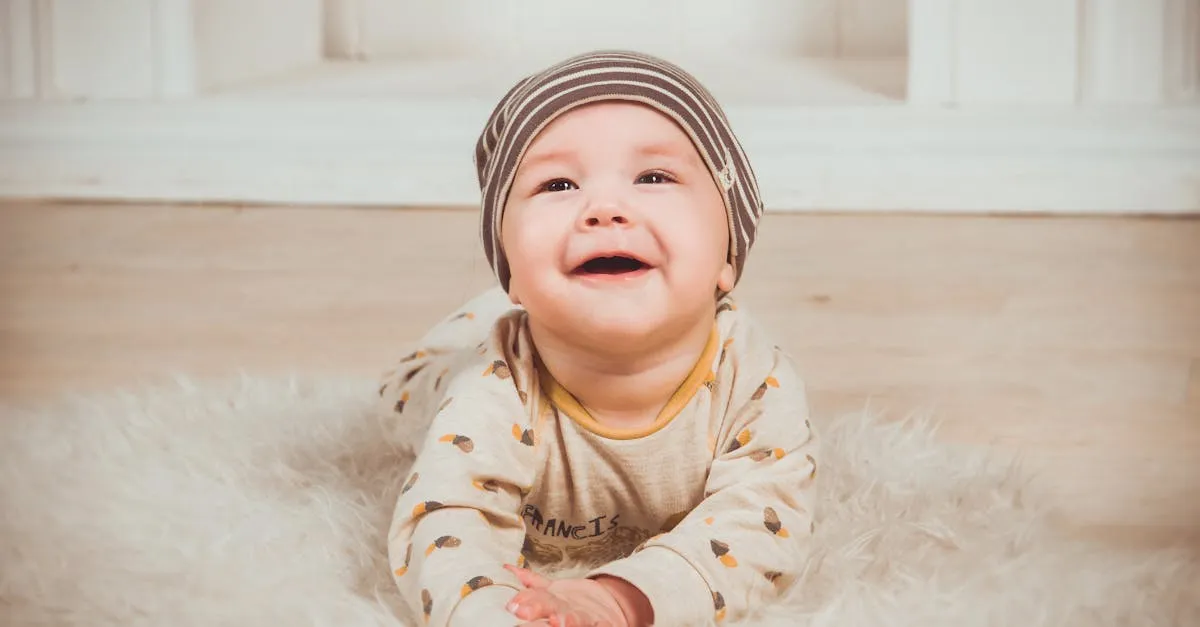
"Every baby moves at their own pace; the essential thing is the movement."
A major turning point in exploration
The transition from the seventh to the ninth month often marks the start of a domestic revolution. For many parents, seeing their baby lift themselves onto their hands and knees brings a mix of pride and apprehension. Early childhood professionals today are unanimous: promoting free movement is the key to this stage setting in naturally. But what exactly is crawling, and why does it occupy such a central place in our parental conversations?
Defining posture and movement
It is crucial to distinguish the static posture of being on all fours from the crawling itself. The posture is a feat of balance: baby must maintain their hips at 90°, their knees on the ground, and their arms extended with palms flat. It's an intense core exercise!
Crawling, on the other hand, is a cross-choreography: the right arm moves forward at the same time as the left leg, and vice versa. This alternating movement requires perfect communication between the two hemispheres of the brain via the corpus callosum.
- Palmar support: Opening of the hand essential for future fine motor skills.
- Girdle dissociation: Ability to move the shoulders independently of the pelvis.
Variation where the child supports themselves on their feet rather than their knees.
Why is this stage fundamental?
Global strengthening
Crawling uses almost all muscle groups. The trunk stabilizes, the back muscles build up to prepare for standing, and the shoulders strengthen to support body weight. It's a true natural gym.
Neuronal Connections
Alternating arm/leg movements stimulate the development of the corpus callosum, promoting better communication between the two cerebral hemispheres.
Vestibular System
By moving their head while crawling, baby calibrates their inner ear and sense of balance, reducing the risk of future falls.
Protective Reflexes
This is where parachute reactions are refined. Baby learns to put their hands forward if they tip over, a vital skill for the first steps.
Spatial Awareness & Autonomy
For the first time, the child decides their destination. They understand the concepts of "far", "near", "above", and "below". This freedom of movement boosts self-confidence and the ability to solve simple problems (how to get around this box?).
To each their own style: The explorers' gallery
The Spinning Top
Baby turns around while staying on their stomach. This is often the first sign that the engine is starting!
The Snake (Commando)
They crawl using only the strength of their arms, belly flat on the ground. Very effective for reaching the desired toy.
The Bear
Arms and legs extended, bottom in the air. This is an athletic variation that shows great strength in the limbs.
The Bottom Shuffle
Baby moves on their bottom, using one leg or their hands. Less symmetrical, but very fast!
The Crab
They move sideways or backward. Moving backward is often easier than forward at the start.
The Classic Crawl
The holy grail of coordination. Belly up, perfect alternating of limbs. Baby is ready to conquer the living room.
The 2026 Movement Observer
Check your child's current skills to discover which type of exploration they are heading toward.
Check the skills on the left to start the analysis.
Analysis in progress...
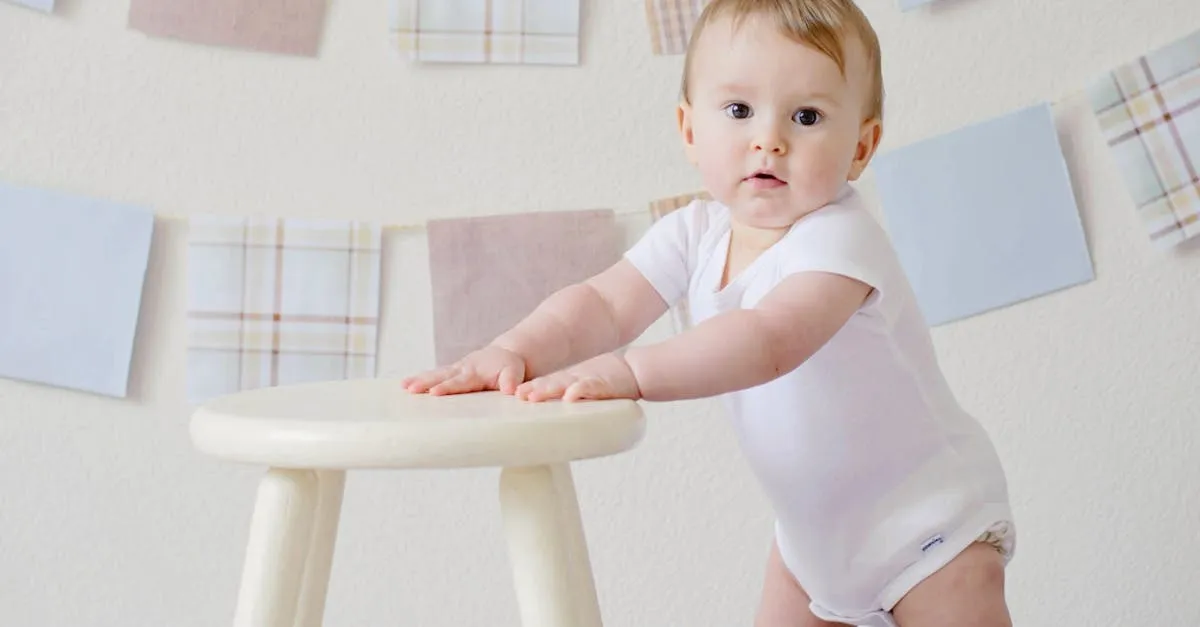
When to expect the start?
There is no expiration date for crawling. On average, the stage appears between 5 and 13 months. This range is huge because it depends on many factors: the child's temperament (some are cautious, others are go-getters), their weight, their muscle strength, and especially their environment.
"The important thing is not the age at which they start, but the quality of movement and the pleasure they take in it."
Some children skip stages and go directly from a sitting position to walking. If this is your child's case, don't panic. Although crawling is "ideal", its absence does not predict a future delay, as long as overall development is harmonious.
Managing doubts and "What ifs?"
My baby isn't crawling
The absence of this stage can sometimes lead to less integration of protective reflexes (learning to fall) or slightly less fluid coordination in future sports activities. However, the human body is incredibly plastic. You can encourage these movements even later through play.
They are moving backward instead of forward
This is completely normal! Arm muscles are often stronger at the beginning than leg muscles. By pushing on their hands, baby propels themselves backward. It's a sign they've understood the principle of propulsion. Forward movement will follow as soon as their legs are ready.
Consult a pediatrician or psychomotor therapist if you observe marked asymmetry (using only one side) or global hypotonia preventing any movement after 15 months.
Encouraging the blossoming of movement
Tummy time
It's the basis of everything. The more time baby spends awake on their stomach (under supervision), the more they strengthen the muscle chains needed for crawling.
Barefoot for grip
Socks slide on the floor! Leave your child barefoot so they can "grip" the ground with their toes and the soles of their feet.
Stimulating environment
Place their favorite toys just out of reach. Don't give them too quickly: moderate frustration is an excellent driver for action.
Expert Tips (Psychomotor Therapists)
- Avoid baby walkers which inhibit natural development.
- Get down to their level: crawl with them to encourage them through imitation.
- Use a play tunnel to make exploration fun.
Frequently Asked Questions
Is it serious if my baby skips the crawling stage? ▼
No, it is not "serious" in the medical sense. About 10 to 15% of children do not go through the classic crawling stage. If they are energetic, curious, and moving in another way, everything is fine. You can always stimulate their cross coordination later through obstacle courses or gym activities.
How long does this phase last? ▼
It can last from a few weeks to several months. Generally, as soon as baby starts pulling themselves up to reach higher objects, crawling becomes a secondary means of transport before disappearing in favor of walking.
How to baby-proof the house? ▼
It's time to install outlet covers, fix furniture (shelves) to the wall, and put on corner protectors. Literally get down on all fours to see what your baby sees: electrical cords and small objects on the floor are their primary targets.
Ready for the next part of the adventure?
After crawling comes the time for verticality. Discover how to calmly support the next steps.