
From 2 to 3 months:
The wonderful awakening
In 2026, parenting is experienced with gentleness. At this age, your baby slowly leaves the world of reflexes to enter that of voluntary interaction. Discover how to accompany these precious moments with serenity.
A bridge to social interaction
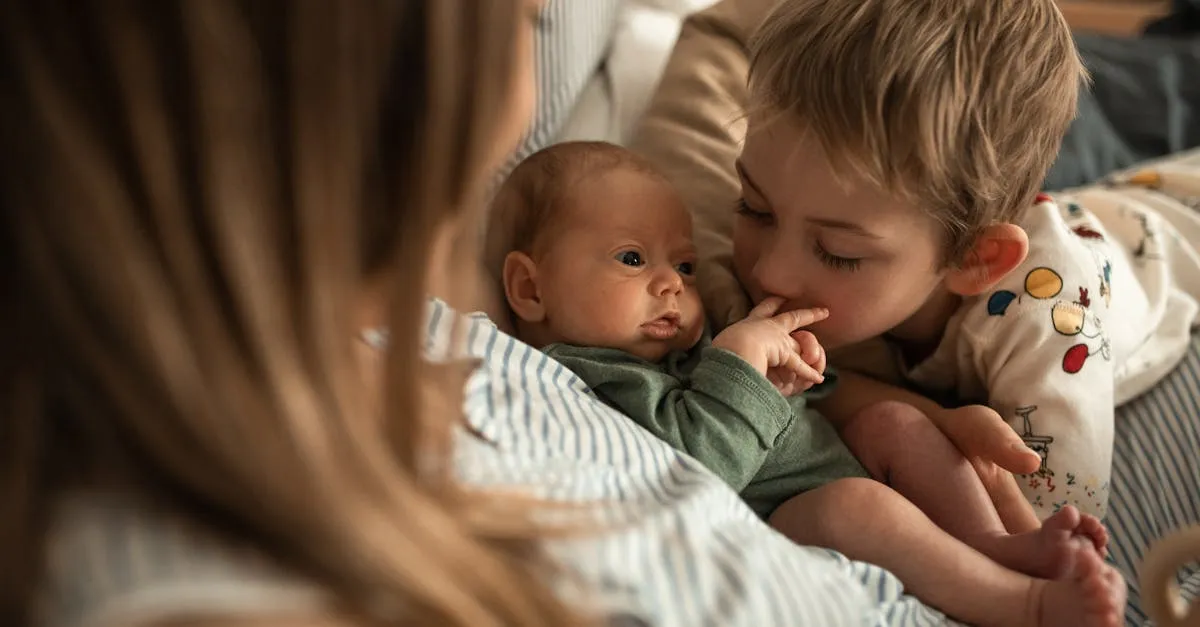
The transition from the second to the third month is often described by parents as a "revelation". This is the moment when the newborn becomes an interactive "little human". Undifferentiated crying gives way to rich facial expressions and, above all, the famous social smile.
This period also marks a progressive stabilization of rhythms. While the first few weeks were focused on survival and adaptation, months 2 and 3 are those of discovery. Your child begins to understand that they can act on their environment: a cooing sound triggers your response, an arm movement touches a suspended toy.

Key development stages
From motor skills to sensory awakening, here is what changes during these 60 pivotal days.
Head Control and Muscle Tone
This is one of the most spectacular changes in gross motor skills. Around 3 months, your baby holds their head much more stably. When on their stomach (the famous "tummy time"), they manage to lift their chest by supporting themselves on their forearms. Their arm and leg movements become more fluid and less jerky than before.

The Social Smile
It's no longer just a physiological reflex. Your baby smiles intentionally in response to your face or voice. This is the beginning of the deep attachment bond.
Visual Tracking
Vision becomes sharper. Baby can now follow a moving object across a 180-degree arc and begins to perceive colors more vividly, especially red and green.
Discovering hands
Baby discovers their own hands. They watch them with fascination, bring them to their mouth and begin to try to grab objects, even if fine motor skills are still being learned. The grasping reflex decreases in favor of more voluntary grasping.

Sleep: Towards more peaceful nights?
At 2 months, baby's sleep is still very fragmented, but a structure is beginning to emerge. The distinction between day and night becomes clearer thanks to the emerging production of melatonin. On average, an infant of this age sleeps between 14 and 16 hours a day.
What changes at 3 months
- ✔ Sleep cycles lengthen slightly.
- ✔ The night sleep period can reach 5 to 6 consecutive hours (for some!).
- ✔ Naps become more predictable (morning, early afternoon, late afternoon).
Peace of Mind Tip
Don't compare your baby to others. "Sleeping through the night" is a biological process of neurological maturation, not a competition. Respect their own awakening rhythm.
This is the ideal time to establish simple bedtime rituals: a soft song, a light massage, or dimmed lights. These cues reassure the child and help them understand that the time for rest is coming. Safety remains paramount: always on the back, in a suitable sleeping bag, with no toys or blankets in the bed.
Wake Window Simulator (2-3 months)
Anticipate the next nap to avoid overtiredness crying. At this age, the average wake time is 1h15 to 1h30.
Recommended nap window:
Tip: Start the wind-down ritual 15 minutes before this time.

Nutrition and Growth
Whether breastfed or bottle-fed, your 2 to 3 month old baby is beginning to space out their meals. Their stomach is growing, allowing them to take in larger amounts at each feeding.
- ● Frequency: Approximately 5 to 7 breastfeedings or bottles per 24h.
- ● Signs of satiety: They turn away from the breast or bottle, their hands are open and relaxed.
- ● Weight and Height: Growth is rapid. Baby gains an average of 20 to 30g per day and grows about 3cm per month.
Note on colic: Often, evening crying related to colic begins to subside towards the end of the 3rd month, as the digestive system matures.
The beginnings of language
Your baby isn't speaking yet, but they are communicating intensely. This is the era of "Goo", "Ooo" and "Eee". These vocalizations are the foundations of their future speech.
Imitation
They watch your lips move attentively and sometimes try to reproduce your expressions.
Turn-taking
If you speak to them, they wait for you to finish before answering you with a sound. This is the start of dialogue.
Attention
They turn their head towards the source of a noise or towards a familiar voice they recognize among a thousand.
Health: The 3-month visit
Usual checks
During this consultation, the pediatrician will check axial tone, growth (weight/height/head circumference) and ensure good hip symmetry. Hearing and vision are also tested by simple stimuli.
Learn more about exams →Vaccination (2026 Schedule)
The second and third months are often marked by vaccination appointments (often at 2 full months). These vaccines protect against serious diseases such as diphtheria, tetanus, pertussis, polio or meningococcal infections.
Gently encouraging awakening
No need for sophisticated toys, you are their best playground.

Stimulating the senses
Use light rattles, textured activity mats or high-contrast fabric books. Sensory awakening happens through touch and hearing.
Baby Massage
A moment of relaxation that promotes body awareness and sometimes relieves digestive tension. It's an excellent way to strengthen the emotional bond.

Early reading
Read them stories. It's not so much the content as the rhythm of your voice and the intonations that stimulate their emerging cognitive abilities.
Dear parents, take a breath!
At 3 months, accumulated fatigue can take a toll. "Baby blues" is far behind, but the adjustment to this new life continues. Remember that the perfect parent doesn't exist. What your baby needs is a parent who is sufficiently caring and who takes care of themselves.
Ask for help with daily tasks.
Allow yourself 15 minutes of "time for self" per day.
Talk with other parents to normalize your doubts.
Frequently asked questions (2-3 months)
My baby is drooling a lot, are they teething?
At 3 months, the salivary glands become very active, but it's not necessarily an immediate tooth eruption. This is a normal stage of digestive and oral development.
Is it normal for them to still spit up?
Yes, the cardia (sphincter at the stomach entrance) is still immature. As long as the baby is gaining weight and not in pain, these small spit-ups are physiological.
They're not making "Goo" sounds yet, should I be worried?
Every child has their own schedule. Some are more focused on motor skills, others on language. If baby reacts to noises and seeks your gaze, give them time.
The rest of the adventure...
Soon, your baby will start exploring the world from a new perspective. Get ready for the next step.