To support parents in choosing a physical activity for their child, this practical guide offers concrete benchmarks by age, advice for selecting safe supervision, and tips to preserve enjoyment and motivation. Each section is based on scientific benchmarks and field examples, with a common thread: the Martin family and their little Hugo, who discovers different activities.
At what age should a child start a sport? Benchmarks by age group and why it matters
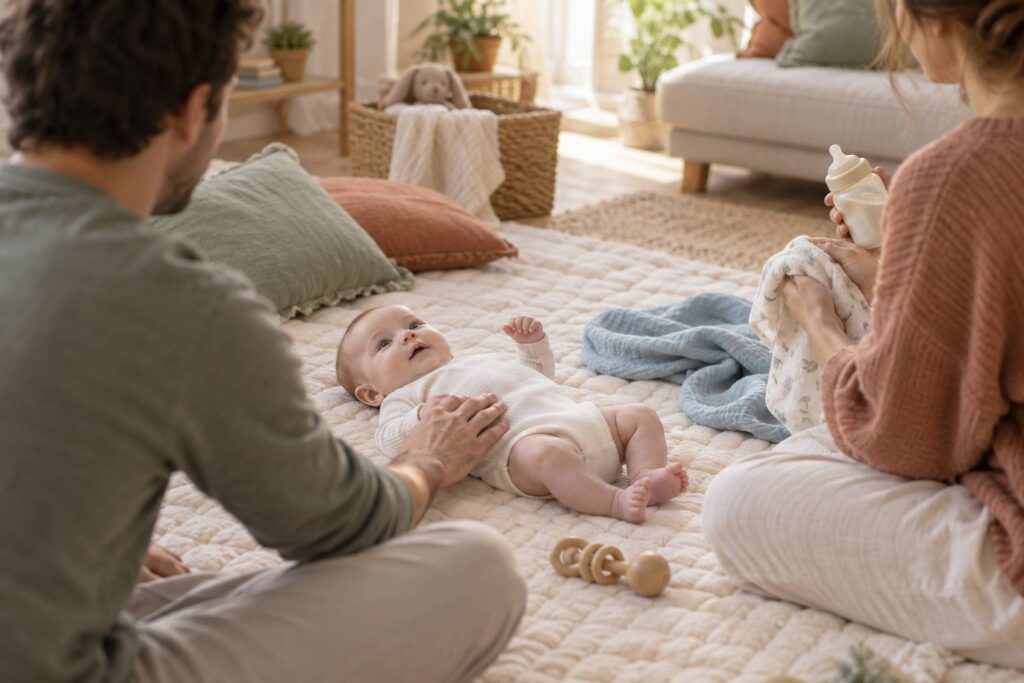
The question of the right age often comes up: should a child be enrolled from the youngest age? International recommendations provide useful benchmarks. For babies (0–1 year), the focus is on regular floor playtimes and tummy time to stimulate motor skills. For toddlers (1–4 years), the goal is to reach at least 180 minutes of varied activity per day, spread out in small playful moments.
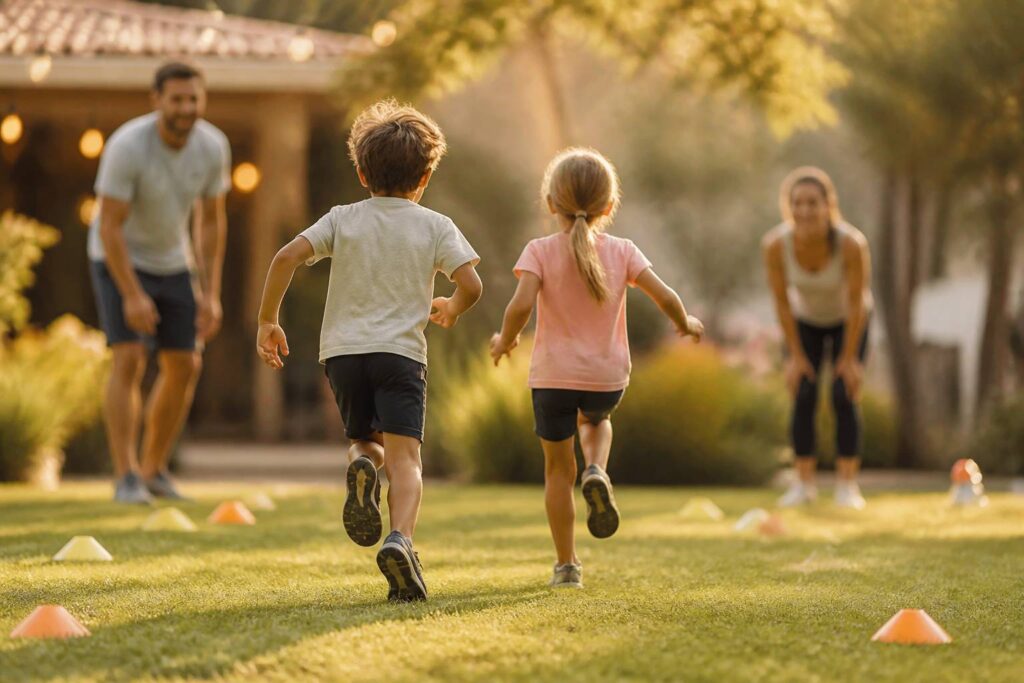
Children aged 5 to 17 years are encouraged to aim for about 60 minutes of moderate to vigorous activity daily. These benchmarks help structure daily life without making it restrictive: the idea is not to line up hours of training but to offer frequent opportunities to move.
Issue: confusion between learning and competition
A 3-year-old child should not be subjected to the same demands as an 8-year-old. Forcing a technique or enrolling in a competitive club too early can kill motivation. The Martin family example illustrates this point well: Hugo starts with “water awakening” sessions at 2 years old, where the focus is on building confidence in the water rather than on proper swimming.
The ideal learning sequence is based on variety: free play, motor courses, short and frequent aquatic activities, alternating between group and motor skills. A progressive play framework promotes coordination and muscular resilience, as supported by the WHO and national recommendations.
Practical solutions for each age
For toddlers: motor courses at home, balance games, free dance. For 5–6 years: introductory sports (judo, recreational football, pony riding) with coaches trained in early childhood. For 7–10 years: try several activities (tennis, climbing, basketball) before choosing.
A pragmatic tip: observe the child over three sessions. If excitement returns and they talk about their achievements, the activity suits them. Otherwise, change without dramatizing. The priority is enjoyment and movement safety, not immediate performance.
Key insight: starting early does not mean early specialization; it is about exposing the child to a variety of movements to build solid motor foundations.
Supervision and safety: how to choose a suitable club and supervision for your child
The choice of club or activity should be based on several concrete criteria: coach training, course adaptation to age, group size, equipment, and time slots. Parents are often rushed and tired; a simple checklist facilitates the decision.
- Coach training: looking for coaches trained in early childhood or holders of recognized diplomas.
- Group size: small groups for 3–6 years to ensure individualized support.
- Duration and format: short and playful sessions for the youngest; alternation of structured exercises and free play.
- Proximity and logistics: schedules compatible with family rhythm and parking or transport facilities.
- Club philosophy: prioritize pleasure, inclusion, and holistic development rather than early competition.
The Martin family compared two local clubs. The first offered long sessions with competition starting at 6 years; the second offered playful cycles, motor skills-trained instructors, and parent-child time slots. The choice was made based on the child’s comfort and the supportive atmosphere.
Practical points during the visit
Observing a class is essential. During a body awakening session: children should move freely, instructions should be simple, and the coach attentive to signs of fatigue or boredom. Also check material safety: suitable mats, protections, water available.
An often overlooked indicator: the club’s policy on parent-coach communication. A good club shares regular feedback and proposes progressive developments, explaining why and how each step is taken.
Example of a quick assessment sheet
| Criterion | Observation | Evaluation (1-5) |
|---|---|---|
| Coach training | Instructors certified in early childhood | 5 |
| Group size | 8 children per 1 coach | 4 |
| Philosophy | Play and pleasure before performance | 5 |
Before registering, request a trial session or an observation slot. The site golaco.fr can help find clubs and compare local offers by discipline.
Key insight: good supervision prioritizes adaptation to the child’s development and emotional as well as physical safety.
Which sport to choose: diversification, specialization and examples of activities by age
The choice of sport must combine the child’s interests and motor ability related to their age. The current trend, supported by health organizations, is clear: diversification before specialization reduces injury risk and promotes motor versatility. In practice, allowing a child to try several sports develops coordination, balance, and enjoyment.
3–4 years: body awakening
Recommended activities are baby gym, water awakening, and free dance. These short formats (15–20 minutes of maximum attention) rely on play and discovery. For example, a motorized course mixing somersaults, balance, and crawling promotes body awareness without demanding technical instruction.
5–6 years: gentle technical learning
At this age, the child can follow simple instructions. Judo teaches respect and safe falling; recreational football develops endurance and cooperation; horseback riding brings balance and responsibility. The important thing is the quality of supervision and absence of competitive pressure.
7–10 years: testing and refining
The range broadens: tennis for hand-eye coordination, climbing for progressive strength and confidence, basketball for team strategies. A good rule: try 3 to 4 sports over a quarter to observe preferences without locking the child into a single choice.
Here is a useful summary table to guide the choice:
| Discipline | Recommended age | Main benefits |
|---|---|---|
| Swimming | All childhood | Endurance, water safety |
| Football | From 6 years | Cardio, cooperation |
| Gymnastics | Early childhood | Flexibility, coordination |
| Climbing | From 8 years | Strength, confidence |
Too early specialization exposes to boredom and burnout. In 2024, nearly 40% of French children abandoned their sports activity before age 8, often because the activity was not suited to their developmental stage or was too competitive.
To avoid quitting: favor diversity, listen to the child, and include family activities (biking, forest walks, ball games) to maintain the pleasure of movement.
Key insight: letting the child explore multiple disciplines is the best guarantee to build a durable and joyful practice.
Integrating sport into daily life: family routines, practical organization, and anti-sedentary tips
Sport for children is not limited to club hours. Daily life offers multiple opportunities to accumulate minutes of activity and develop motor autonomy. A simple and realistic routine transforms recommendations into habits without pressure.
Structuring the week without overloading
For a school-age child, aiming for 60 minutes of activity per day can translate into: active transportation (walking, biking) in the morning, active recesses, weekly training, and free play at the end of the day. Parents can split these minutes into short sessions, adapted to the family schedule.
The Martin family established a ritual: Wednesday afternoons are dedicated to an outdoor family activity. These moments strengthen bonds and set an example. Parents are powerful role models: moving together makes effort more fun and lasting.
Tips to limit sedentary behavior
- Break up screen time: favor short and scheduled periods.
- Integrate micro-active breaks every 30 minutes during homework or screen use.
- Favor active trips (bike, scooter) when possible.
- Offer dynamic games at home: treasure hunts, balance courses, trampoline.
A practical tip: turn a daily trip into a game. For example, time the distance to school and try to improve the “family record” without performance pressure.
Preschool and primary schools play a key role: motor courses, balance workshops, and swimming sessions provide benchmarks and anticipate club registration. To deepen these practical resources, parents can consult specialized guides and parental support platforms like La Vie de Bébé, which offers simple sheets and activity ideas at home.
Key insight: regularity and daily pleasure are worth more than occasional intensity; moving together strengthens the child’s engagement.
Motivation, well-being, and transition to adolescence: keeping the child engaged without guilt
Motivation is the fragile thread linking pleasure and perseverance. Parents often seek “tricks” to maintain engagement: the key lies in listening, valorization, and flexibility. Major transitions (changing schools, puberty) require adjusting intensity and activity form.
Understanding the child’s signals
A child who is bored, tires quickly, or finds excuses to avoid training sends signals that must be taken seriously. Instead of forcing, ask: do they need a different pace? Another sport? A friend in the same activity? Socialization is often the deciding factor: a sport that creates connections is more likely to be kept.
Parents can test a simple rule: observe behavior before and after three sessions. Persistent enthusiasm (looking forward to the session, pride after the class) is a good indicator of lasting interest.
Adolescence: adapting intensity and preventing injuries
In adolescence, the focus shifts toward intensity and structure. Recommendations continue to advise 60 minutes per day, with bone and muscle strengthening several times per week. ANSES reminds us that diversification limits specialization-related injuries and promotes sports longevity.
Finally, parental kindness is essential. Projecting one’s own dreams onto the child or comparing to peers kills motivation. Valuing effort, celebrating small progress, and encouraging autonomy will do more than any authoritative speech.
Key insight: lasting motivation arises from pleasure, social connection, and adaptation: keeping these three at the center protects the desire to move in the long term.