Ideal Baby Room Temperature in Winter: Practical Guidelines
Cold weather can add a layer of concern for parents who want to keep their baby comfortable without causing overheating. It is essential to replace strict numbers with observable and easy-to-apply benchmarks for everyday use.
Physical signs of comfort in infants are immediate and useful indicators. Rather than focusing on a precise value, observing the baby’s skin, extremities, and behavior provides reliable information.
How to Spot Baby’s Comfort
Hands and feet that are slightly cooler than the rest of the body are often normal, while moist, reddish skin or rapid breathing may indicate excessive heat. Conversely, shivering, very cold skin, or a baby who is difficult to soothe may suggest the need for extra protection.
Checking the neck and chest provides a more representative reading than the hands. A gentle touch on the neck allows you to judge if the body temperature is balanced without unnecessarily disturbing the child.
Behavior is another indicator: a baby who sleeps deeply without agitation shows thermal comfort, while a frequently awakened or tense baby may be trying to communicate discomfort.
Practical Example: Claire and Noé, a Night of Learning
Claire recently experienced her first winter night with Noé. After several back-and-forths, she learned to interpret simple signs: a repositioned blanket, an insulating layer added or removed, and adjusting the room temperature according to the child’s neck sensation. These adjustments helped reduce nighttime awakenings related to thermal discomfort.
A concrete story helps memorize gestures: during a long nap, Noé’s chest remained soft to the touch while his hands were slightly cool. Claire strengthened her monitoring without multiplying blankets, favoring an appropriate layer of clothing.
This gradual and attentive approach helps decrease parental anxiety. The goal is to learn to listen to the baby’s bodily cues rather than applying rigid rules.
In practice, starting with a discreet check before and after falling asleep and noting the child’s reactions over a few days allows creating a personalized routine. This method reduces the number of nighttime manipulations and promotes a soothing atmosphere.
For families living in older apartments or prone to drafts, isolating the window or moving the bed away from draft sources can make a noticeable difference. Small arrangement adaptations, easy to test, often produce quick benefits.
Insight: prioritizing observation of the body and behavior of the baby provides concrete and adaptable benchmarks, more useful than strict numbers to find the right thermal balance.
Promoting Peaceful Sleep by Regulating Room Heating
Heating directly influences the sleep quality of little ones. A room that is too hot or too cold can fragment sleep, whereas a stable and gentle ambiance helps establish more regular cycles.
Heat routines and bedtime rituals are powerful levers. Adjusting the perceived temperature before bedtime, without multiplying actions, prepares the baby to gradually calm down.
Heating Rhythm, Naps, and Night
For naps, aiming for an immediate comfort sensation without overloading the baby with blankets helps limit awakenings. A gentle transition between activity and sleep aids the child in synchronizing their physiological rhythm.
Slightly reducing the perceived heat during the falling asleep phase can encourage deeper sleep. The goal is to facilitate sleep onset rather than target perfect immobility of temperature.
Practical Tips for Longer Nights
Avoiding bulky textiles directly on the face and favoring breathable materials reduces the risk of overheating. An appropriate sleeping sack or a light suit provides a layer of safety while limiting blanket displacement.
Consistency in schedules and bodily rituals—warm bath, gentle massage, diaper change, and bedtime—creates sensory markers associated with a stable thermal environment. These steps, repeated with kindness, facilitate falling asleep.
For worried parents, a small daily log over a few days helps identify patterns: awakenings related to temperature occur more often if there are significant fluctuations in the room. Gradually adjusting heating and observing the effect reduces anxiety and improves confidence.
In terms of equipment, avoiding localized heat sources near the crib and encouraging even heat distribution preserves a constant atmosphere. The goal is to achieve a stable perceived temperature around the bed without creating hot spots.
Explanatory video: a visual resource can help understand proper actions and visualize examples of safe setups.
Insight: establishing gentle and constant thermal routines helps the baby associate ideal warmth with bedtime, thus reducing nighttime awakenings.
Safety and Prevention: Avoiding Risks Related to Heat or Cold in the Room
Thermal safety involves simple gestures and special attention to materials and energy sources. Prevention is better than correction, especially with a newborn sensitive to variations.
Identifying warning signs and knowing how to react reassures parents and protects the child. Prevention integrates both the setup and the choice of textiles and equipment.
Warning Signs and Immediate Actions
Shallow or rapid breathing, moist skin, a change in skin color, and intense agitation are signs that require preventive action. Removing a layer, briefly airing the room, or repositioning the bed are simple and effective responses.
Conversely, very cold limbs, unusual lethargy, or an unusual cry may mean the child needs extra protection. Adding a soft layer and monitoring the reaction helps restore comfort without causing stress.
Safe Equipment and Layout
Avoiding flame devices or portable heaters near baby furniture reduces fire risks and exposure to localized heat. Prefer central heating that diffuses heat more evenly.
Using breathable textiles and an appropriate sleeping bag limits blanket handling and thus the risk of covering the face. Synthetic, less breathable materials can promote sweating; favoring natural fibers close to the body is often more comfortable.
| Observed Symptom | Interpretation | Recommended Action |
|---|---|---|
| Moist skin, red face | Possible overheating | Remove a layer, ventilate slightly |
| Very cold hands and feet | Need for additional insulation | Add a soft layer or move closer to the bed |
| Restless sleep | Thermal discomfort | Readjust clothing and check the environment |
This table offers a quick reading to act without delay. The responses are designed to be implemented within moments, without sophisticated equipment.
A short educational video completes these practical instructions by showing safe and immediate gestures.
Insight: quickly detecting warning signs and applying simple, measurable responses helps prevent most incidents related to thermal comfort.
Concrete Tips for Adjusting Heating and Dressing Baby in Winter
Simple daily gestures, easy to integrate, simplify the management of thermal comfort. The goal is to have a practical toolbox on hand to react without panic.
The choice of clothing layers, managing blankets, and some simple tools make life smoother for the family.
Layers and Appropriate Textiles: Basic Principles
Thinking in layers allows adjusting without waking the child. A breathable layer close to the body, an insulating layer, and, if needed, an outer blanket or sleeping sack make a flexible solution.
Avoiding multiple loose blankets on the bed reduces the risk of face covering. A well-sized sleeping sack or baby sleeping bag often retains heat better while limiting handling.
Useful and Practical Tools
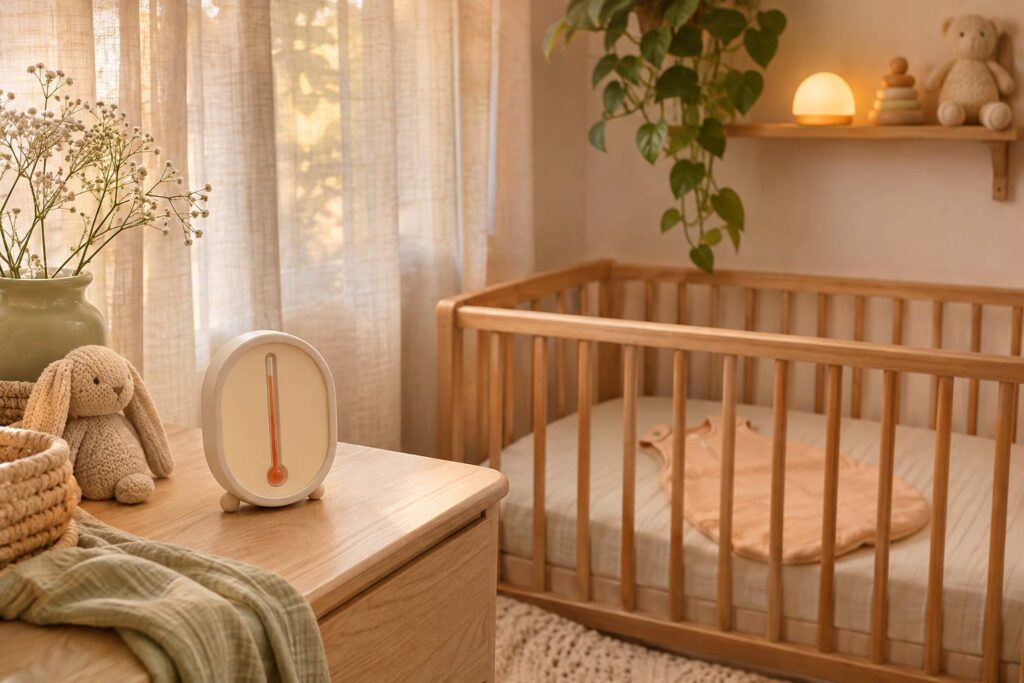
Some objects can ease daily life: an ambient thermometer to have a general indication, a soft night light for nighttime checks, and an observation log to note baby’s reactions to adjustments. These aids help quickly find the routine that suits the family.
For those wondering about suitable heating power for a home, it is possible to consult specialized technical guides. For example, the site artigianoperpassione.it offers resources to estimate the required power or understand the cost of boiler replacement, which can help plan heating system improvements.
- Check the neck rather than the hands to judge comfort.
- Favor layering over a single thick clothing item.
- Avoid loose blankets and favor solutions that stay in place.
- Test adjustments over several days to observe effects on sleep.
These actions, simple to apply, allow acting immediately after a diaper change or before a nap without complicating the parental routine.
Insight: a layering strategy, modest tools, and a progressive trial approach provide immediate practical utility, reducing stress and improving baby’s comfort.
Maintaining Thermal Comfort Daily: Routines and Mistakes to Avoid
Consistency in maintenance and setup promotes lasting comfort. Small habits are better than anxious intermittent monitoring.
Understanding common mistakes allows adopting safer and more energy-efficient practices without sacrificing the child’s well-being.
Heating System Maintenance and Preventive Actions
A well-maintained heating system distributes heat evenly and reduces fluctuations. Monitoring radiator condition, bleeding if necessary, and checking annual maintenance regulations are good practices to include in the family calendar.
It is recommended to schedule regular checks by qualified professionals to ensure system safety. These interventions help maintain a stable and safe atmosphere for the baby.
Soothing Routines for Parents and Baby
Establishing rituals that combine thermal comfort and sensory calming strengthens the sense of security. A warm bath followed by a gentle massage and appropriate clothing signals the transition to sleep to the child.
Preparing the room a few minutes before falling asleep helps avoid sudden temperature changes at bedtime. These gestures reduce the number of nighttime manipulations and improve rest quality for the whole family.
Finally, sharing observations with relatives or early childhood professionals helps consolidate good practices. A well-informed community reassures and offers proven solutions.
Insight: regular heating system maintenance combined with predictable routines creates a framework of trust that facilitates sleep and baby’s well-being daily.