
Creating a Soothing Sea-Themed Atmosphere for the Child’s Room
A sea-themed room is successful when it manages to be both soothing and appropriately stimulating. The choice of colors, textures, and layout directly influences the child’s mood and the parents’ feelings during daily care.
Starting with a soft palette is a simple and effective strategy. Light blues, sandy creams, and touches of aqua green create a serene background without overwhelming the infant’s senses.
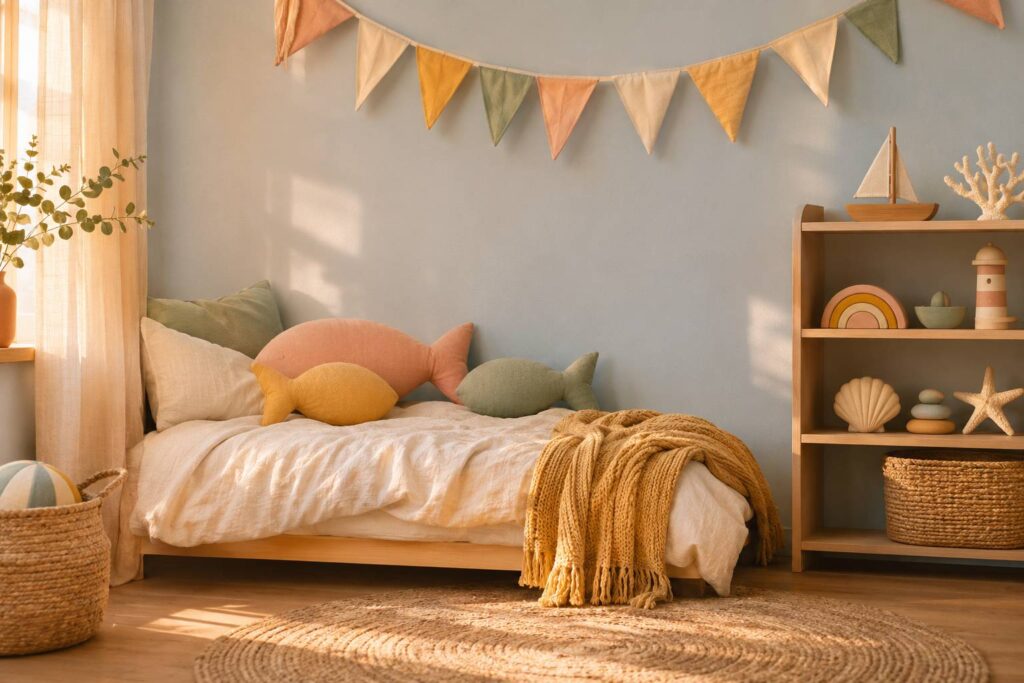
Walls painted in pastel tones allow for more colorful decorative elements while maintaining a sense of space. For example, a pale blue wall with a cloud/fish mobile hanging brings visual rhythm without becoming intrusive.
Lighting plays a key role in maintaining a calm environment. A dimmed main source, complemented by a soft night light directed toward the floor, supports the regulation of the baby’s sleep-wake cycles.
It is recommended to choose warm light bulbs and avoid direct lighting above the bed. An adjustable fixture near the changing table can illuminate only the necessary area during nighttime care, thereby reducing deep awakenings.
The introduction of thematic objects must respect safety and functionality. Hanging elements should be out of reach of the crib and firmly fixed, while decorative textiles should be breathable and washable.
The room can incorporate textures reminiscent of the coastline: a sea rush mat on the floor, wrinkled linen cushions, and a small driftwood shelf. These natural materials stimulate touch without posing danger when chosen for their durability and ease of care.
To illustrate, Lucie chose to place a low shelf on which marine fabric boxes and a shell-shaped light box rest. This setup allows for accessible storage and limits floor clutter while keeping the theme present.
Integrating simple visual markers also helps reassure parents. A small corner dedicated to breastfeeding with a comfortable armchair, a light blanket, and a supplementary lamp creates a functional and warm care space.
Lastly, considering acoustics enhances soothing. Thick curtains or a wall panel made of absorbent fabric reduce corridor noises and echoes, contributing to a calmer environment for the child and less stress for the adult.
In summary, the primary objective is to create an atmosphere where safety, comfort, and coastal aesthetics blend without excess, giving the room a reassuring and lasting character.
Promoting Peaceful Sleep with Appropriate Marine Decor
The infant’s sleep benefits from a stable and predictable environment, and decoration can support this need without promising miracles. Visual markers, a constant routine, and thoughtful layout choices have concrete effects on the quality of naps and nights.
Positioning the bed and crib according to natural light remains essential. Placing the sleeping area away from direct windows avoids premature awakenings related to morning sun and limits temperature variations.
The choice of bedding textiles influences thermal regulation. Organic cotton sheets and a seasonally adapted sleeping bag help maintain constant comfort without overheating the child.
Light accessories should be used sparingly. A night light with adjustable intensity, positioned at a sufficient distance from the bed, offers a reassuring focal point for the adult without disturbing the baby’s sleep hormone.
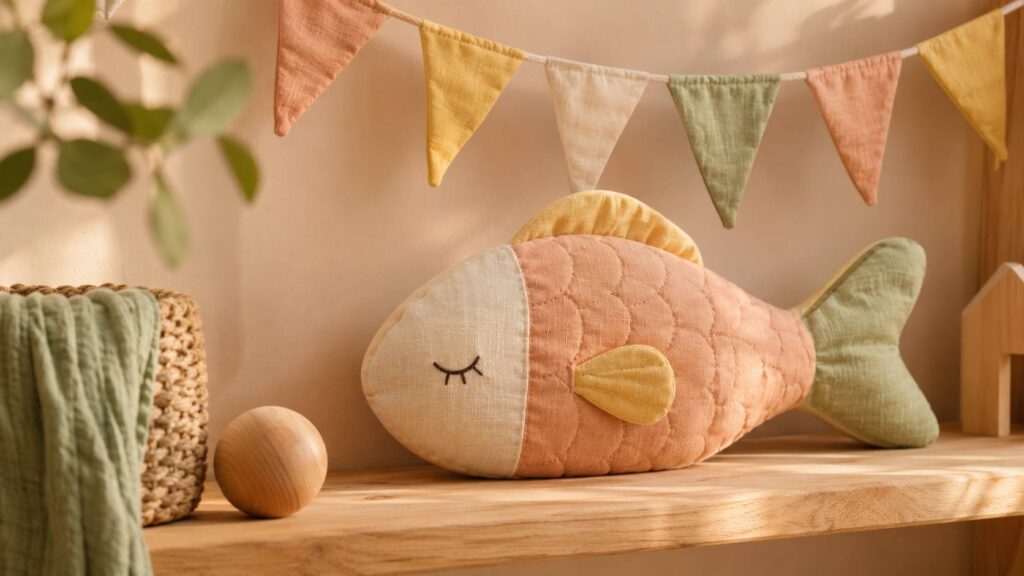
A concrete example: Lucie established a bedtime ritual combining a warm bath, soft music, and progressive lighting. Marine elements — a mobile with fish shadows and a discreet projection of ripples on the wall — accompany the descent into sleep without overstimulation.
Sound regulation complements the visual effect. A device emitting soft white noise or low-volume wave sounds can help mask domestic noises. However, it is crucial to keep the volume low and the source away from the crib.
Here is a simple comparison table to help choose suitable lighting and sounds:
| Element | Recommended Option | Expected Effect |
|---|---|---|
| Night Light | Adjustable warm light | Promotes falling asleep and nighttime care |
| Projection | Discrete ripples, low intensity | Soothing visual stimulation during the routine |
| Sound | Wave sound effects or white noise at low volume | Masks disturbing noises while calming |
It is important to remember that each child is unique: some will be very sensitive to light projections while others will find them a reassuring anchor point. Observing the child’s reactions over several nights allows for adjusting these stimuli.
Finally, considering safety around the bed includes correct fixation of wall decorations and the absence of soft objects in the sleeping area. These measures reduce risks and facilitate restorative sleep for the child as well as peace of mind for the parents.
Key insight: a well-thought-out marine environment concretely supports sleep routines by combining soft light, soothing sounds, and suitable textiles.
Stimulating Sensory and Motor Development through the Marine Theme
The thematic decoration is not just decorative: it can become an educational tool for early sensory discoveries. By integrating textures, patterns, and suitable toys, the room becomes a safe exploration space.
Varying textures encourages tactile development. Linen fabrics, a natural fiber rug, and plush toys with contrasting textures allow the baby to explore through touch and develop sensory discrimination.
Mobiles and hanging elements encourage visual tracking and hand-eye coordination. A mobile composed of contrasting marine shapes, placed at an appropriate distance, will encourage the baby to fixate, follow, then reach for the object.
For gross motor skills, setting up a play corner on the floor is essential. An activity mat with beach motifs and secure accessories allows practicing rolling over, crawling, and first seated games.
A useful anecdote: Lucie arranged a mat resembling a cove with pebble-shaped cushions to encourage Tom to sit up. Within a few weeks, these visual and tactile markers sparked grasping attempts and better trunk control.
Auditory stimulation should be handled carefully. Nursery rhymes evoking the sea, marine bird sounds, or gentle rippling contribute to sound recognition but must remain brief and at low volume to avoid sensory overload.
Simple hide-and-seek games around a light wooden box reinforce object permanence and trust. Hiding a small bucket or a shell-toy then revealing it teaches object constancy in a playful and thematic way.
Also think about transitions between active and quiet zones. A reading corner with a comfortable armchair, a few illustrated books about the sea, and a soft lamp creates a sensory refuge after a period of intense activity.
On the safety front, all activity elements must comply with current standards: robust fixings, VOC-free paints, and washable materials. This vigilance ensures stimulation occurs without health or physical risks.
In short, a well-conceived marine universe becomes a rich learning ground: it nurtures sensory curiosity while supporting essential motor milestones in early childhood.
Setting up an Adaptable and Practical Space for Parents
Thinking about practicality from the outset avoids frequent readjustments and reduces parental stress. A well-organized room facilitates care, laundry management, and toy storage while respecting the chosen maritime aesthetic.
A modular changing table easily transforms into a dresser as the child grows. This type of setup extends the usage period and limits successive purchases, contributing to a sustainable approach.
Integrating accessible storage solutions encourages future autonomy. Stackable fabric boxes, natural fiber baskets, and low shelves make it possible to orderly classify clothes, diapers, and toys.
Here is a practical list to organize the space without overloading it:
- Changing area near a soft light source and storage for essentials.
- Breastfeeding corner with a comfortable armchair and a small table to place a glass of water.
- Play area clearly defined with a washable mat and age-appropriate toys.
- Modular storage to transform the room over the years.
- Laundry folding surface or accessible dresser to minimize movements during care.
Lucie’s room illustrates these principles well: a changing table turned dresser, labeled baskets for clothes, and a small play area that folds away if needed. This organization reduced time spent on household tasks and made care more serene.
For textiles and furniture, favoring easy-care materials makes daily life easier. Washable covers, washable paints, and smooth surfaces reduce time spent on maintenance and reassure when accidents happen.
A final practical point concerns targeted lighting: a bedside lamp for nighttime bottles, a reading light for evening stories, and switches within reach reduce handling in the dark.
Key insight: a well-planned room combines functionality and aesthetics to lighten parents’ mental load while keeping the marine universe coherent.
Choosing Natural Materials and Accessories for a Seaside Room
The choice of materials conditions indoor air quality, object durability, and the overall feel of a themed room. Natural materials bring warmth and authenticity while remaining easy to maintain.
Opting for linen, organic cotton, and plant fibers reduces the risk of skin irritation and limits exposure to volatile compounds. These materials dry well, are breathable, and naturally fit the sought coastal style.
Light or driftwood furniture offers a seaside aesthetic while remaining sturdy. Their natural patina will evolve with use, bringing a lively side to the decoration.
Woven elements such as rattan or sea rush create textured points of interest. Used for baskets or lampshades, they emphasize the theme without overloading the space.
A practical note: for finding a coherent coastal palette and choosing appropriate materials, the online magazine deco-atlantique.fr offers practical guides on seaside inspiration and natural texture selection.
Safety and maintenance remain priorities. Favoring non-toxic finishes, machine-washable textiles, and easy-to-disinfect accessories simplifies daily life and protects the baby’s health.
A concrete example: replacing a synthetic rug with a woven jute model, covered in the center by a small washable rug, combines natural look and ease of hygiene. Similarly, favoring labeled odorless paints limits unwanted emissions.
Evoking coastal history can also enrich the sensory experience. Hanging a stylized map of ocean currents or illustrations of local fauna adds cultural context and stimulates the curiosity of future readers and little explorers.
Finally, thinking about longevity: choosing modular pieces and resistant materials allows reusing elements for an older child’s room, avoiding waste and supporting an economical and sustainable approach.
Final insight: favoring natural materials, safe finishes, and durable objects creates a healthy and enduring seaside room where aesthetics serve the child’s and family’s well-being.