Dressing baby according to the season: basic principles of clothing layers
Understanding the basic principles allows meeting the newborn’s physiological needs without unnecessary complexity. Layering clothes is a simple and adaptable method that respects the baby’s thermal regulation while allowing the freedom of movement necessary for motor development.
The fundamental principle is based on three distinct functions: insulating (retaining heat), warming (providing an additional source if needed), and breathable (preventing overheating and moisture). Each layer has a specific role, and it is enough to adjust their number and material according to the ambient temperature.
To make the concept concrete, imagine a novice parent preparing for an outing in the stroller: in direct contact with the skin, a layer of soft cotton absorbs sweat. Next comes an insulating intermediate layer, then an outer protective layer against wind or rain. This progression protects without confinement.
Which materials to prioritize and why
Natural fibers such as cotton and bamboo are preferred for the base layer: they are soft, hypoallergenic, and absorbent. For the intermediate layer, merino wool (fine and breathable) or technical materials help retain heat without trapping moisture.
The outer layer must be windproof and slightly water-repellent to protect against bad weather, but without compromising ventilation. Closed systems or technical sleep sacks are chosen based on use: home, stroller, or car travel.
Practical table of layers and uses
| Layer | Role | Examples | Remarks |
|---|---|---|---|
| Base layer | Skin contact: absorption and comfort | Cotton bodysuit, long-sleeved t-shirt | Choose an appropriate size to avoid wrinkles |
| Intermediate layer | Thermal insulation | Fleece pants, light sweater, wool jumpsuit | Remove if baby is sweating |
| Outer layer | Protection against wind and rain | Windbreaker, baby nest, footmuff | Prioritize mobility and safety in the car |
| Night layer | Maintain a stable temperature during sleep | Sleeping bag, thick pajamas according to season | Check the recommended TOG for the sleeping bag |
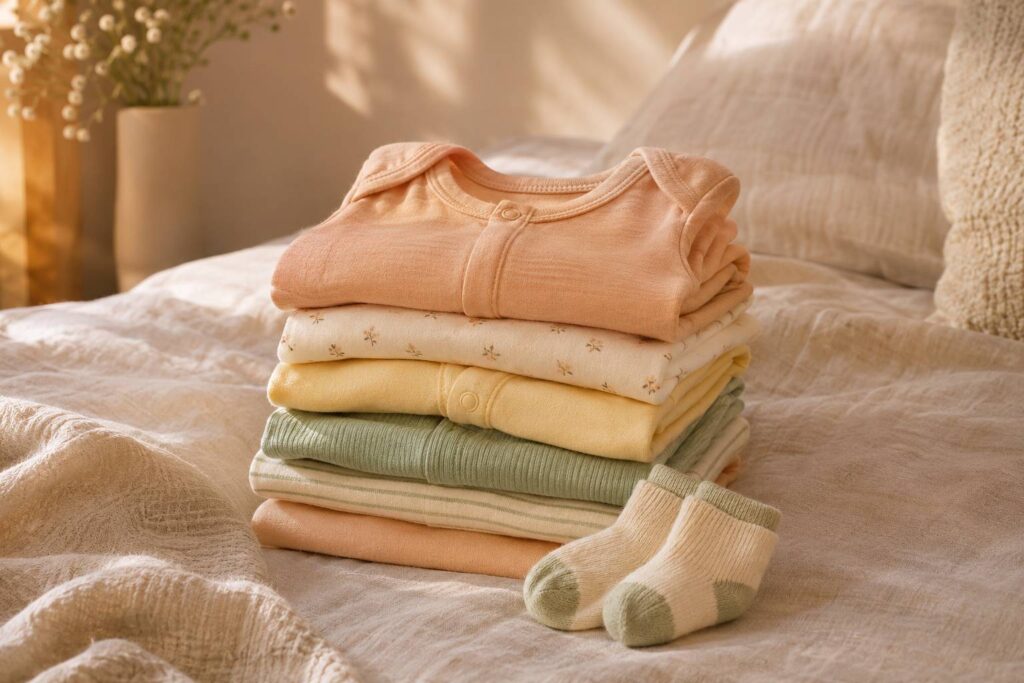
In daily practice, it is useful to have interchangeable pieces on hand: several bodysuits, at least two intermediate layers of different textures, and a small outer jacket. Quick changes require practical openings (press studs in front, covering zippers).
The common thread remains the same family: an urban apartment parent learns to judge the temperature by touching the baby’s neck. If the neck is warm and dry, the outfit is suitable; if it is damp or hot, it must be lightened immediately. This is a simple and reliable gesture, easily memorized by everyone.
Insight: the rule to remember is simple: one more layer than the adult for outings, attention to moisture, and a preference for natural and breathable textures.
Dressing baby for winter: clothing layers, outings, and staying warm during sleep
Winter requires heightened attention: an infant’s ability to regulate temperature is limited. The goal is to maintain stable warmth without causing overheating, especially during sleep or car travel.
For the walk, the layering system applies strictly. The base layer remains absorbent and non-sticky, the intermediate layer must be insulating, and the outer layer windproof and water-repellent. If the walk is long, plan an extra textile folded in a bag to compensate for a drop in temperature.
Practical tips for winter outings
Before leaving, test the temperature by touching the baby’s neck and chest. Extremities (hands and feet) are often cold without the baby being hypothermic: adding mittens and booties may suffice. In the stroller, a well-fitted footmuff prevents drafts. In the car, pay attention to safety: a thick snowsuit can prevent the seat’s harness from fitting properly. Using blankets placed on the seat after secure installation is preferable.
When the baby returns home, quickly remove the outer layer to avoid moisture buildup. A small simple gesture like removing a pair of wet socks and changing the bodysuit is often enough to restore comfort.
An urban parent living on the fifth floor without an elevator quickly learns that layering facilitates climbing stairs: keeping interchangeable layers allows adjusting the outfit at each stop. This flexibility reduces stress and limits unnecessary heat loss.
Winter sleep: sleeping bag and safety
The choice of sleeping bag depends on the TOG (warmth index) suited to the room temperature. Without going into complex figures, the practical rule is to balance pajamas and sleeping bag: if the room is cool, opt for warmer pajamas and a lightweight sleeping bag; if the room is temperate, the opposite.
Avoid layered blankets in the crib to prevent any risk. Clothing must allow the baby to move their legs without being too tight. Press studs and fasteners must be sturdy and well protected to avoid irritating the skin.
The video illustrates simple gestures: checking the neck, using a suitable footmuff, and organizing a changing pouch with essential items. Watching a visual demonstration often helps build confidence.
In case of doubt, observing the baby’s behavior guides the action: a restless and flushed baby may be overheating, whereas a calm but shivering baby needs an extra layer. The key is quick adaptation, not perfection.
Insight: for winter, prioritize modularity: layers that are easy to add or remove, breathable textiles, and vigilance regarding moisture keep baby comfortable and safe.
Dressing baby for summer: avoiding overheating and preserving comfort
Summer presents the opposite risk: overheating. Parents must learn to lighten clothes without compromising protection against the sun and insects. The prioritization is simple: coolness, sun protection, and hydration if the child is old enough.
The base layer must be very light and breathable. Thin cotton or bamboo fabrics are suitable. Short sleeves or lightweight bodysuits allow good body ventilation. Avoid sticky synthetic materials when temperatures rise.
Summer outings: organization and preventive actions
A summer outing bag contains fewer heavy layers but must remain organized: wide hat, spare bodysuit, thin swaddle, small towel, and a small room thermometer if useful. Shade takes precedence over sunscreen for newborns: avoid direct exposure and prioritize umbrellas or stroller positioned in the shade.
- Checklist for a summer outing: hat, spare bodysuit, thin swaddle, water bottle for the companion, light blanket, hand fan.
- Plan shaded stops and position rotations if the baby sleeps in the stroller.
- If the temperature is high, favor outings early in the morning or late afternoon.
- Watch the skin color and breathing; a red complexion or rapid breathing require alertness: cool the neck and seek shade.
Avoid applying thick sunscreen on a newborn: for very young babies, avoiding direct sun is the safest protection measure. For older children, a suitable product can be used on exposed areas, complemented by a hat and light covering clothes.
Summer sleep: maintaining a stable night temperature
At night, the room should remain cool and ventilated. A thin bodysuit and a lightweight sleeping bag often suffice. It is preferable to avoid fans blowing directly on the baby. Rather, ventilate the room respecting gentle air circulation. Signs of overheating include a red face, visible sweat, and restless sleep.
A novice urban parent quickly learns to recognize the hottest hours and plan accordingly: if the nap happens at the warmest time, creating a shaded corner or moving the nap to another time can solve the problem.
Insight: summer favors lightness and prevention: shade, breathable textiles, and simple organization are the best allies to avoid overheating.
Dressing baby in spring and autumn: managing variations and surprises
Transition seasons require adaptability. Mornings can be cool and afternoons mild, rain can appear without warning. Organizing layers for these changing days reduces stress and allows quick outfit adjustment for the baby.
The strategy is to stack thin layers rather than use a single thick garment. A parent living near a park discovers that a simple zip-up cardigan and a swaddle often suffice to move from a chilly morning to a sunny afternoon.
Tips for the transitional wardrobe
Prefer unisex and practical pieces: long-sleeved bodysuits, light cardigans, soft pants, and easy-to-add accessories like socks and a light hat. The changing bag must contain an intermediate layer and a complete spare outfit.
During outings, organize two options: a warmer outfit and a lighter one. Zippers and press studs facilitate quick changes. In the car, remove the outer layer before fastening the seat to maintain safety while avoiding overheating due to thick textiles.
The video shows concrete examples of layering adjustment throughout the day and offers tips for packing clothes in a light bag. These demonstrations help visualize the minimal effort needed to stay responsive to weather variations.
Practical applications and preparation
A small ritual can help: before each outing, assess the weather and prepare a warm option and a cool option. Mentally noting the estimated duration of the outing (15 minutes or several hours) helps decide if an extra layer is needed.
On a sensory level, the baby expresses their needs: agitation, unexplained crying, or stiffness can signal thermal discomfort. Intervene calmly and methodically — touch the neck, check the skin, remove or add a layer — to quickly restore comfort.
Insight: in intermediate seasons, the key is forecasting and modularity: bringing an extra option avoids panic and protects the baby’s well-being.
Signs of comfort and practical gestures: reading the baby and acting quickly
Knowing how to read the baby’s bodily signs is essential for adjusting clothing layers without hesitation. These signals are reliable and accessible to all: neck temperature, skin color, breathing, and behavior.
The neck remains the main control point: warm and dry indicates good balance; hot and moist signals overheating; cold suggests a need for extra warmth. Observing the face, lips, and extremities completes the assessment.
Practical gestures during changing or bedtime
During changes, take the opportunity to evaluate the baby’s thermal state. Remove the outer layer and feel the neck. If the skin is moist, change the bodysuit immediately and allow drying before putting on another layer. For bedtime, check that movements are free and that fasteners do not compress the chest.
A novice parent, faced with a restless night, can try a simple method: change the pajamas for a more breathable material and reduce layering. These adjustments, done calmly, often improve sleep quality without requiring radical changes.
Quick checklist before going out
- Touch the neck: first quick assessment.
- Check the layer: comfort and dampness of the bodysuit.
- Prepare an option: an extra piece in the bag.
- Protect the head: light hat or cap depending on the season.
- Car safety: remove bulky layers before fastening the seat.
To support parents through the seasons, practical resources exist. For example, the seasonal magazine dedicated to climate and seasonal rhythms helps choose the right time to garden or adapt the home, useful for planning outings with baby: meteotop.fr.
Finally, maintaining a calm routine around clothing changes helps the baby associate these gestures with security. A gentle and constant ritual reduces parental anxiety and reassures the child.
Insight: reading bodily signs and acting methodically turns daily dressing into a moment of attentive, soothing, and effective care for the baby’s well-being.