Maintaining a Reassuring Feeding Routine During Travel
Meal stability provides the baby with an essential reference point, even far from home. In a travel context, preserving feeding schedules and rituals helps reduce stress for both the infant and the parents.
Why Routine Reassures the Baby
A baby associates signals (time, place, voice, bib) with mealtime. These signals create an emotional security that facilitates the transition to a new environment. When the Martin family goes on an outing with their baby Noé, they make sure to reproduce as much as possible the same steps: settling down, singing, then feeding. This helps Noé understand that despite the change of scenery, care and food remain constant.
Routine also influences digestive rhythm and sleep. A meal that is too late or very different can disrupt digestion and the following nap. To limit these effects, adapting the duration and composition of meals without upsetting the key times of the day is a simple and effective strategy.
Practical Implementation: Organizing the Meal Day
Before leaving, prepare a small sheet with the usual times and the baby’s hunger signs (hand movements, restlessness, sucking). Placing this sheet in the diaper bag allows the substitute caregiver — grandparent, nanny, or other — to respect the routine. The Martin family uses a laminated sheet stuck on the cooler: times, approximate quantities, and specifics (preference for warm milk, egg allergy, etc.).
During the trip, maintain three anchors: time (close to usual), ritual (bib, song, same blanket), and environment (choose a quiet spot). If the journey requires schedule changes, opting for healthy and frequent snacks rather than a single large meal helps maintain a regular digestive rhythm.
Concrete Example: Train Journey
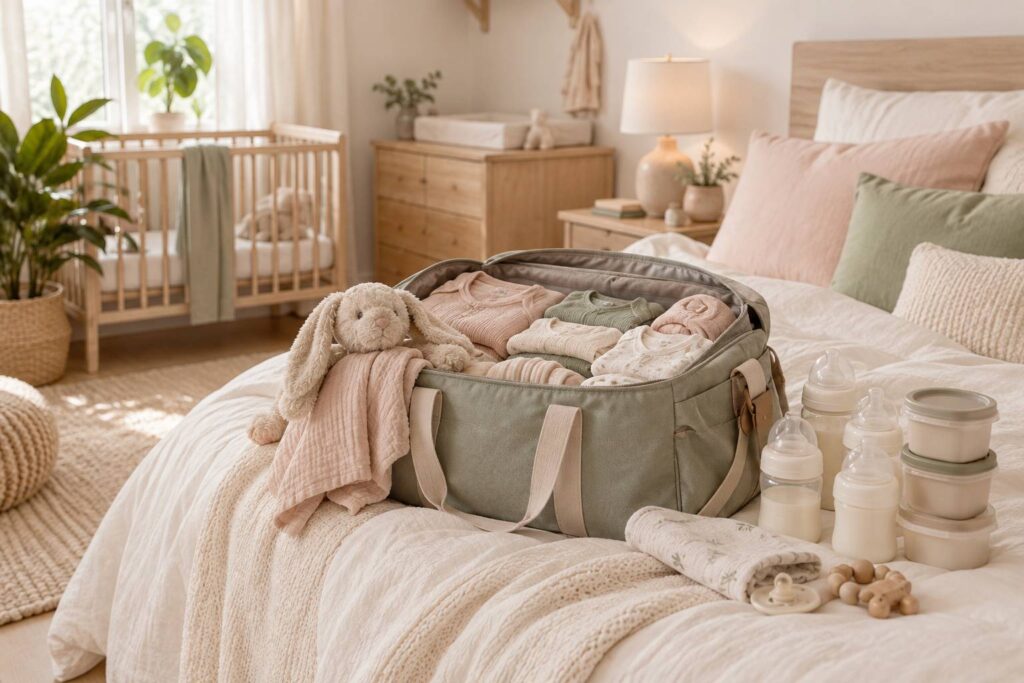
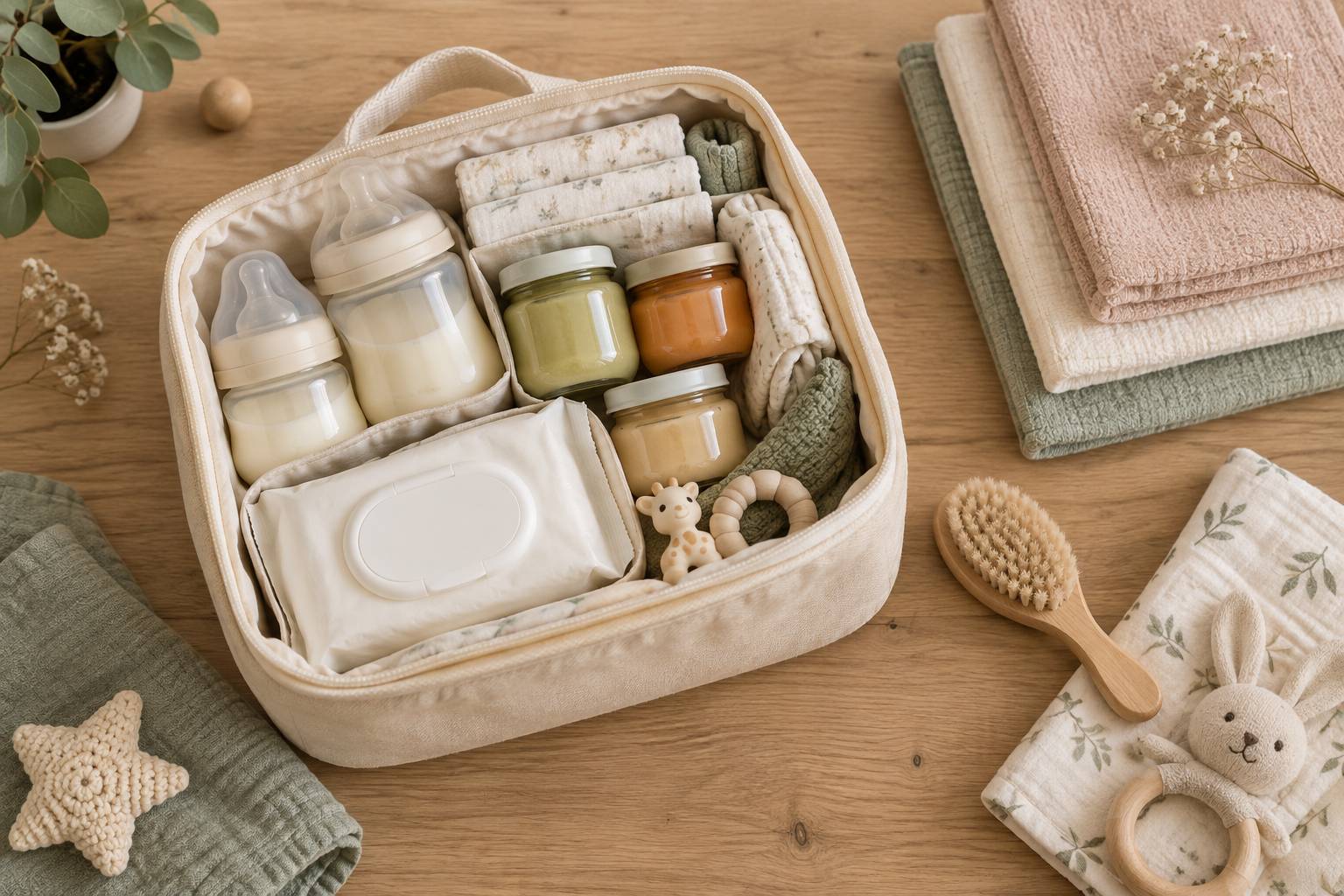
On a train journey, plan an accessible “meal kit” containing two prepared bottles, some small jars, pouch compotes, and wipes. During an unexpected stop, the Martin family takes a short break, sets up a silicone mat for the baby, and feeds according to the ritual: same song, same position. The baby calms down faster, and feeding occurs without crisis.
If the baby feels discomfort, reducing the offered quantity and favoring a soothing nursing session or bottle may be enough. Remember that vacation days can be more stimulating: hunger can manifest differently, and that is normal.
Practical Tips and Final Details
Preparing labeled individual portions saves time. Bringing a small notebook to note the quantities consumed and reactions to new foods facilitates follow-up with the pediatrician if needed. Finally, stay flexible: a single less balanced meal does not compromise long-term health, but continuity and the caring presence of parents do.
Key insight: preserving rituals and adjusting schedules rather than changing everything allows the baby to feel secure and promotes peaceful feeding during travel.
Feeding Bottles on the Road: Preparation, Water, and Sterilization
Bottles and infant milk require special attention: microbiological safety, temperature, and autonomy while traveling. Anticipating these points prevents much anxiety during a trip or stay abroad.
Choice of Milk and Quantity
Before departure, check the availability of infant milk at the destination. If the usual milk is not sold, plan a sufficient supply or inquire at the local pharmacy. The Martin family always takes two cans of powdered milk in addition to the planned consumption: this allows dealing with flight delays or lost luggage.
For a long trip, preparing several bottles in advance can relieve parents, but be careful with storage. Prepared bottles must be consumed within 2 hours if kept at room temperature, unless kept cool.
Water and Sterilization
The quality of water is crucial. If tap water is not drinkable, use bottled water suitable for infants or a thermos of boiled and cooled water. For preparing bottles, bottled mineral water is often recommended while traveling.
There are three sterilization options:
- Chemical sterilization with tablets or liquid — convenient when no boiling water is available.
- Boiled water then cooled — a simple method if a kettle is available.
- Portable or microwave electric sterilizers — effective if the accommodation provides such equipment.
The Martin family carries a small case with sterilizing tablets and a compact cleaning brush. In a hostel without a kitchen, the tablets have saved several meals safely.
On a flight, regulations allow carrying milk and water for the baby in the cabin. Pre-prepared liquids and individually packaged doses facilitate security checks. If the baby prefers warm milk, a thermos flask keeps the temperature for a few hours or allows use of hot water available on board.
Tips for Night Feeding While Traveling
For hotel nights, keeping dim lighting and identical gestures to home makes returning to sleep after a bottle easier. Preparing a night bag with bottle, dispenser, wipe, and bib avoids fumbling in the dark.
Finally, noting quantities taken at night helps maintain regular monitoring and adjust if necessary upon return.
Key insight: securing water and sterilization simplifies bottle feeding on the road and reduces parental stress.
Introducing New Foods Away from Home: A Calm Approach
Introducing solids is an exciting but sometimes stressful step when traveling. The goal is to offer variety and safety while remaining cautious regarding allergies and textures.
When and How to Introduce New Foods While Traveling
If diversification has already started before departure, continuing the same pace prevents unexpected reactions. For a baby who has never tasted certain foods, it is better to wait for a calm moment for introduction, away from stress factors (travel time, crowd, fatigue).
The Martin family chose to introduce new types of food only after a day of rest on site. This allowed calmly observing any reactions and adjusting the rest of the stay if needed.
Table: Recommendations by Age and Food Types
| Age | Recommended Foods While Traveling | Precautions |
|---|---|---|
| 0–6 months | Exclusive breastfeeding or infant formula | Avoid any solid additions; monitor water used |
| 6–9 months | Smooth purees, pouch compotes, small portions of cereals | Introduce one food at a time and observe 2–3 days |
| 9–12 months | Tender pieces, adapted biscuits, pasteurized cheese | Monitor chewing and avoid hard foods |
| 1–3 years | Adapted family meals, moderate local foods | Avoid honey before 1 year, introduce spices gradually |
Concrete Examples and Precautions
If a local market offers fresh fruits, wash and peel on site if possible. For a baby used to homemade purees, first offer a small spoonful of the local product to test acceptance and tolerance.
Food allergies must be monitored: if an unknown food causes a reaction (hives, diarrhea, vomiting), contact a healthcare professional. Carrying a copy of the health record and local pediatrician contacts is a wise precaution.
Finally, respect the order of introduction: some foods like strawberries or fish can be introduced later if the baby has not been previously exposed.
Key insight: introducing new foods on the road gently and observing attentively enables combining culinary discovery and food safety.
Homemade Meals vs. Commercial Jars: Practical Choice and Organization
Choosing between preparing meals oneself and using commercial jars depends on the length of the stay, available equipment, and time.
Advantages and Disadvantages
Homemade meals offer full control over texture and ingredients. However, they require time and resources to maintain the cold chain. Ready-to-eat jars are convenient, stable at room temperature, and provide valuable speed during outings or emergencies.
The Martin family opts for a combination: a few frozen homemade purees for the first days and a reserve of jars for the road. This allows maintaining taste quality without overloading.
Practical Checklist for the Choice
- Length of stay: for a weekend, favor jars; for several weeks, consider homemade preparation on site.
- Available equipment: presence of refrigerator, microwave, or kitchenette.
- Time and energy: holidays often mean rest; choose the solution that preserves parental energy.
- Baby’s sensitivity: if the baby refuses industrial products, prepare more homemade meals.
Using reusable pouches for compotes or purees facilitates storage and avoids waste. Insulated containers and thermoses keep food warm and are practical for outings. To avoid shocks, transport jars in compact format on a tray or hard box.
A “family friendly” hotel can be a real gain: refrigerator in the room, microwave, and even children’s menus already planned. Remember to inquire with the establishment before booking to find out if these services are available. Moreover, for families who want to treat themselves, discovering local restaurants offering simple and mildly spiced dishes can enrich the experience without risk.
Key insight: mixing jars and homemade preparations according to stay length and equipment combines practicality and nutritional quality during the trip.
Essential Accessories and Handling the Unexpected
Adapted accessories and an emergency supply turn a potentially stressful situation into a manageable incident. Equipping intelligently saves time and energy.
List of Essential Accessories
- Thermos flask to keep hot water or warm milk.
- Reusable pouches for purees and compotes.
- Airtight containers for individual portions.
- Silicone bibs easy to clean.
- Suction plate-mat to stabilize meals at restaurants.
- Sterilizing tablets and cleaning brush for bottles.
- Small medical kit with fever reducer, bandages, and local pediatric contact details.
Anticipating Mishaps
Always plan an extra supply of food for at least one day. In case of delay, lost luggage, or temporary store closure, this margin avoids panic reactions. The Martin family always keeps an emergency bag with three bottles, some powdered milk, and several ready jars.
Consider storage: sensitive foods (meats, cooked vegetables) must stay cool. In the car, place these containers inside the air-conditioned cabin rather than the trunk. For long hikes, use a cooler and ice packs.
Resources and Support
Before departure, note the contact details of a local pediatrician and the address of a nearby pharmacy. In case of concern, a phone consultation often calms anxiety and provides clear instructions. Moreover, reliable parenting media, including La Vie de Bébé, offer practical guides and concrete sheets to better prepare trips.
Finally, to get inspired by simple recipes and international menus adapted for toddlers, consulting culinary resources remains useful; for example, galaxy-restaurant.fr is a magazine on cooking, travel, and lifestyle where one can find recipes and ideas.
Key insight: a well-thought-out bag and a few simple rules for storage transform unforeseen events into manageable situations.