
Digestible and Child-Friendly Pizza Dough: Ingredients, Proportions, and Role
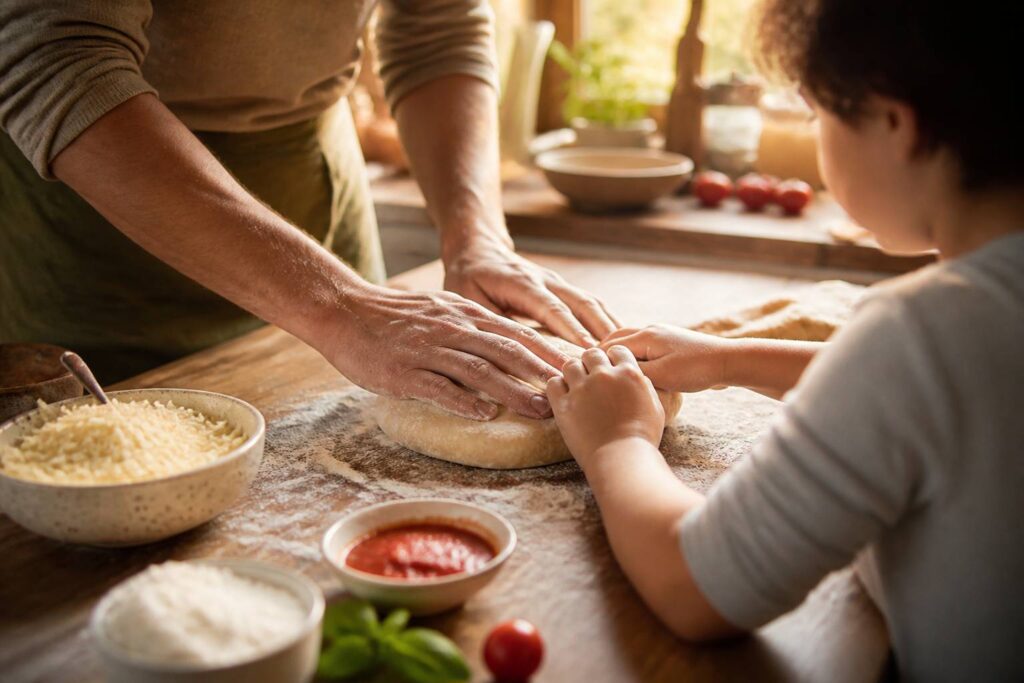
For a homemade pizza suitable for the whole family, the base starts with a balanced dough. The following proportions are suitable for 2 pizzas of 30 cm, i.e., 4 to 6 servings, and are designed to limit the feeling of heaviness after the meal.
Here is a clear table of ingredients and their role, useful for quickly finding your way before getting started.
| Ingredient | Quantity | Role in the recipe |
|---|---|---|
| Type 00 or T55 flour | 500 g | Provides structure and elasticity |
| Lukewarm water (30-35 °C) | 300 ml | Hydrates the dough and activates the yeast |
| Fresh baker’s yeast | 5 g | Fermentation and rising |
| Fine salt | 10 g | Enhances flavor and regulates fermentation |
| Extra virgin olive oil | 20 ml | Softens the dough and helps with baking |
Each ingredient has a specific role. Flour defines the texture: type 00 flour will give a finer dough, while T55 will offer a bit more chewiness, often appreciated by children accustomed to familiar textures.
To improve digestion, it is recommended to replace 50 g of flour with fine durum wheat semolina. This substitution, used by many Italian pizzerias, offers a slightly crispy crust and a lighter meal sensation.
How to adapt these proportions for toddlers
For young children, the issue is not just quantity but composition. A pizza too rich in fat and salt can tire a child’s digestive system.
Reducing salt and choosing drained mozzarella limits excess water that soaks the dough and avoids unnecessary salt addition to the youngest children’s plates.
Parents can prepare a common pizza and reserve a portion before adding stronger ingredients (raw ham, heavily salted cold cuts). This simple technique avoids multiplying preparations without adding stress.
Concrete example: the Martin family
The Martin family often prepares two identical bases: one for adults with stronger toppings, and one for baby Lucas (10 months) where mozzarella is reduced, the vegetables are well cooked and finely chopped. This method avoids multiplying dishes and reassures parents about the quality of the meal.
At preparation, the parent places the finished dough on a floured surface and reserves a small portion rolled out thinner for Lucas. The vegetables (zucchini, carrot) are pre-steamed to be tender and digestible on the pizza.
To make the recipe accessible, it is helpful to print or display this table in the kitchen. Thus, each time, the base is mastered and novelty comes with toppings adapted to children’s tastes.
Insight: starting with a properly proportioned dough and simple substitutions (semolina, drained mozzarella) facilitates shared meals and limits heavy meals for the little ones.
Kneading and Fermentation Techniques for a Soft and Light Dough
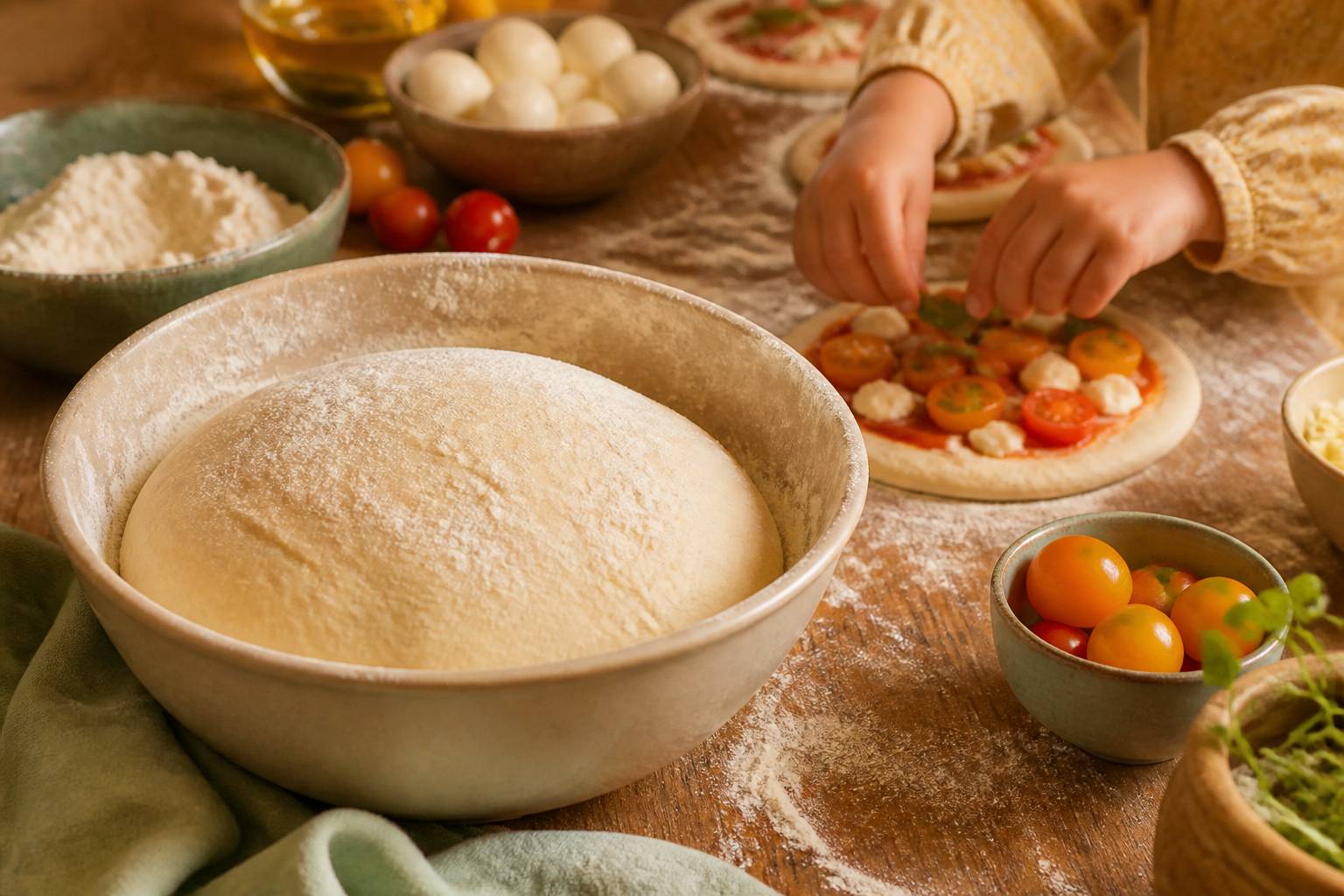
Kneading and fermentation are the steps that transform simple ingredients into a digestible dough. The gestures, duration, and fermentation method will influence the texture, taste, and gastric tolerance of the final product.
Two main approaches exist: rapid fermentation at room temperature and slow fermentation in the fridge. Each has advantages and limits depending on family rhythm.
Manual kneading: gestures and durations
Manual kneading of 8 to 10 minutes is the recommended option to properly develop the gluten network. The gesture consists of stretching then folding the dough, turning the bowl regularly to obtain a smooth surface.
For busy parents, too short kneading leads to dough that retracts when rolled out. Conversely, working the dough too much will make it hot and sticky, complicating handling. The right measure makes the dough supple, elastic, and easy to roll out.
Fermentation: short or long?
Rapid fermentation for 2 hours at room temperature (22-25 °C) is convenient for an impromptu dinner. The dough then doubles in volume and offers a satisfactory texture.
Slow fermentation (12 to 24 hours in the refrigerator) is recommended to develop more complex aromas. Neapolitan pizzaiolos often recommend this method for better flavor and better digestibility. Warning: do not exceed 24 hours in the refrigerator to avoid excessive acidification and a sticky dough difficult to roll out.
For the Martin family, the strategy is to prepare the dough in the evening for baking the next evening. This organization turns the chore into a little ritual, and the dough obtained pleases adults and children thanks to its airier crumb and developed aromas.
Common mistakes and practical solutions
Several errors often recur: water too hot killing the yeast, salt added directly on wet yeast, insufficient kneading or fermentation too long. Each can be corrected with a simple gesture.
For example, if the dough seems sticky after a short fermentation, a 10-minute rest at room temperature before rolling out allows the gluten to relax and facilitates handling.
Another useful tip: using a little olive oil on fingers and the work surface prevents dough from sticking and adds a light pleasant flavor for children, without excess fat.
Insight: mastering kneading and choosing fermentation based on the family schedule allows obtaining a dough that is both tasty and easier to digest for little ones.
Rolling Out and Baking Like a Pizzeria: Tips for Domestic Oven and Alternatives
Rolling out and baking often distinguish homemade pizza from restaurant pizza. Simple gestures, combined with common equipment, allow a crispy and soft result, even at home.
In France, about 68% of households own an oven capable of reaching 280 °C, the ideal temperature for baking similar to pizzerias. This data encourages aiming for a long preheat and using a stone or hot baking tray.
Rolling techniques for an airy crust
Avoiding the rolling pin is one of the most widespread tips among artisans. The rolling pin presses the air bubbles formed by fermentation and makes the crust denser.
The recommended method is to flatten the ball with the palm, then stretch the dough while turning it with fingers to get a uniform thickness of 3 to 5 mm. Holding the dough on the knuckles to widen the edges without tearing helps obtain an airy crown.
For children, a playful version consists of offering small individual pizzas that each child stretches with their hands. This safe activity allows involving the little ones without risking exposing them to dangerous tools.
Baking in the domestic oven: steps and settings
Preheating the oven to 280 °C for 30 minutes with a stone or baking tray inside is the basis. Placing the pizza on the hot tray at the bottom for 8 to 10 minutes allows even baking.
For an even more golden result, activating the grill for the last 1 to 2 minutes gives extra coloring and gratin without weighing down the dough.
If the home oven does not reach these temperatures, cooking in a cast iron skillet is an excellent alternative. Searing the bottom for 3 to 4 minutes over high heat, then finishing under the grill offers a texture contrast often pleasing to children and adults.
A sensory tip: placing a sprig of rosemary or thyme in the oven during baking releases subtle aromas that recall the wood-fired oven and stimulate the appetite of the little ones without adding harsh seasonings.
Insight: mastering rolling and good heat management make all the difference; it is possible to approach the quality of a pizzeria with a well-prepared domestic oven.
Balanced Toppings and Recipes Suitable for Toddlers
Toppings determine the nutritional balance and digestibility of a pizza for a young child. Choices must favor simplicity, appropriate cooking of ingredients, and particular attention to choking hazards.
Here is a practical list of options designed for children, easy to remember for busy parents:
- Drained mozzarella cut into small cubes to avoid excess water.
- Tender cooked vegetables: zucchini, carrots, well-drained spinach.
- Small pieces of cooked ham rather than raw cold cuts.
- Deseeded and finely chopped olives to limit choking risk.
- Light pesto or homemade tomato coulis without added sugar.
Quantities and balance
For a 30 cm pizza, the following guidelines help maintain a balanced plate: 80-100 g of sauce, 100-120 g of mozzarella in total, and 50 to 80 g per solid ingredient. Limiting to three main ingredients avoids overload and sogginess of the dough.
During dietary diversification, offering a mini-pizza with only one new vegetable at a time allows observing taste and digestive reactions. It also reduces parental stress and creates a positive relationship at snack or dinner.
Example of a weekly menu for the whole family
A simple weekly plan can lighten mental load. For example:
- Monday: Mild Margherita (tomato, mozzarella, basil) — ideal for discovery.
- Wednesday: Shredded roast chicken and cooked zucchini — source of easily chewable proteins.
- Friday: Roasted vegetable pizza (bell pepper, eggplant) cut very finely — tasting textures.
To deepen topping ideas and obtain practical sheets, pizzagourmande.fr offers suggestions adapted to families and young children. This comprehensive resource is useful to vary menus without complexity.
Insight: a simple, cooked, and finely chopped topping transforms the pizza into an accessible and reassuring family meal for parents, without sacrificing the pleasure of sharing.
Gluten-Free Variants, Quick Yeast-Free Dough and Practical Storage for Parents
Family needs evolve: intolerances, diets, or busy evenings. Two variants offer pragmatic solutions without sacrificing quality.
The first: gluten-free pizza. It uses a suitable blend and hydration adjustment.
Gluten-free pizza: proportions and advice
Replacing wheat flour with a gluten-free mix (rice + corn + potato starch) works well. A practical formula is 450 g of mix for 350 ml of water. Mix flours well and let the dough rest a few minutes to help bind ingredients.
A recent study highlights that occasional gluten-free uses concern a significant part of the population, and some families choose this option to test the child’s tolerance. Professional support is advised in case of severe intolerance diagnosis.
Quick yeast-free dough: fast recipe and easier digestion
When time is short, yeast-free dough is a practical solution. Ingredients for a standard pizza: 250 g of flour (T45 or T55), 120 ml lukewarm water, 2 tablespoons of olive oil, 1/2 teaspoon of salt, and 1/2 packet of baking powder (optional).
Baking powder replaces long fermentation and reduces digestive effort related to fermentation. Preparation takes a few minutes and baking is done in 10 to 15 minutes at 220 °C to obtain a crispy result. This variant is suitable for unexpected evenings and children sensitive after rich meals.
Storing dough or a parbaked base in the refrigerator or freezer facilitates busy evenings. Dough keeps 48 hours in the fridge wrapped and up to 2 months in the freezer. To reheat, passing 5 to 7 minutes in a hot oven restores crispiness.
Finally, some prevention gestures reduce waste: parbake for 3-4 minutes for juicy toppings, drain mozzarella beforehand, and limit toppings to a maximum of three per pizza.
Insight: gluten-free variants and quick dough offer real solutions for families, allowing to combine speed, quality, and digestive comfort without guilt.