In brief:
- Odin is a first name of Nordic origin linked to a rich mythological history and symbols of wisdom and bravery.
- Its meaning oscillates between power, poetry, and quest for meaning, making the choice meaningful but sometimes questioned by those around.
- The popularity of Odin is gradually increasing in France and several European countries, driven by pop culture and sports and artistic figures.
- For parents, this first name invites nurturing educational choices: valuing affection, encouraging autonomy, and preparing simple responses to external questions.
- Practical resource: consult laviedebebe.com for concrete advice on baby care and gentle parenting.
Odin: origin and history of the first name
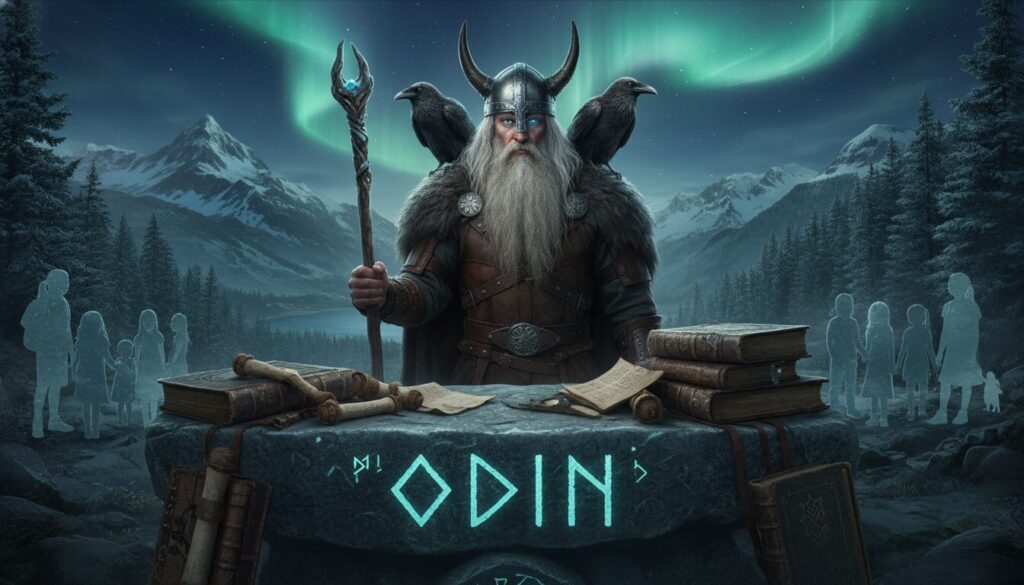
In the study of first names, Odin stands out due to a origin deeply rooted in Nordic mythology.
The name refers to the chief god of Scandinavian traditions, a complex figure associated with wisdom, war, poetry, and runes.
Etymology and earliest attestations
The etymology of the first name comes from ancient Germanic languages; the term is linked to a root often meaning “fury” or “inspiration”.
Historically, it appears in sagas and skaldic poems as a divine name, before being adopted as a human first name much later.
Historical evolution up to modern France
In France, the use of the first name Odin is relatively recent.
It began to appear more frequently from the 1980s onwards, with a gradual implantation and initially limited spread.
Factors explaining contemporary appeal
Several phenomena explain the renewed interest in this first name: the popularity of series and films inspired by mythologies, enthusiasm for Nordic roots, and attraction to short and powerful first names.
Another factor is the search for “meaningful” first names by parents wishing to mark a strong symbolic connection.
Contextual example
Imagining a contemporary family — the Martins — looking for a first name that evokes both strength and gentleness illustrates the phenomenon well.
For them, Odin embodies a balance: a simple-sounding name to call, a deep history, and a affirmed cultural identity.
Key insight: the first name Odin carries a millennia-old history transposed into modern usage, offering parents a strong identity dimension to pass on.
Odin: meaning, symbols, and place in Nordic mythology
The meaning of a first name like Odin intertwines with the symbols surrounding it in Nordic mythology.
Understanding these symbols helps grasp why this first name appeals and why it may also arouse questions.
Main symbols and their interpretation
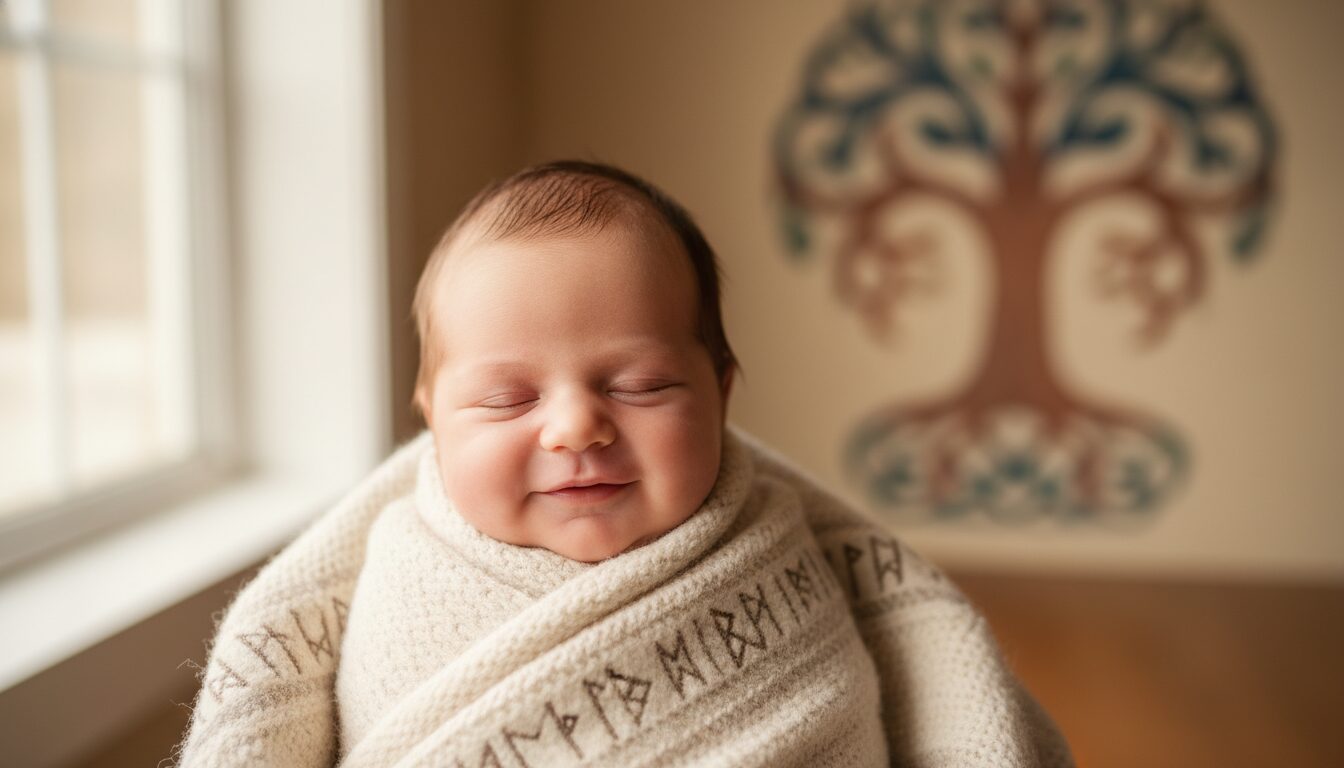
Among the symbols associated with the god are the two ravens Huginn and Muninn, the eight-legged horse Sleipnir, the spear Gungnir, and the world tree Yggdrasil.
These images evoke in turn thought, memory, travel, warrior speech, and quest for meaning — notions transposable to the human first name.
Psychological and cultural dimension
On a psychological level, the first name can invite the ideal of wisdom, intellectual curiosity, and boldness.
On the cultural side, it symbolizes a connection to Scandinavian roots or an appreciation for an epic imagination.
Ambiguities and contemporary transpositions
It is important to note the ambiguity: the figure of Odin is not only benevolent, it is also ambivalent — magician, war chief, traveler of worlds.
This duality makes the first name rich but sometimes requires explanations when faced with preconceived ideas.
Concrete examples
Take the example of a daycare where a child named Odin attracts questions from peers.
Educators can turn these moments into little cultural lessons: simply explaining that the first name comes from ancient stories and that, like any first name, it mainly defines the person who carries it.
Key insight: the meaning and symbols related to Odin offer a narrative richness that parents can use to convey values without imposing stereotyped images.
Choosing the first name Odin: expected personality and practical advice for parents
Choosing a first name is a meeting point between history, personal taste, and pragmatism.
For the first name Odin, it is useful to anticipate often associated character traits and to adopt concrete gestures to support the child.
Typical profile and emotional needs
The personality associated with the first name often describes a calm, sentimental child who seeks affection.
He can be gentle and caring, but also sensitive to conflicts and in need of a lot of encouragement.
Concrete educational advice
To help a little one named Odin find his balance, favoring reassuring and consistent responses is essential.
For example, establishing simple evening rituals — soft songs, quiet reading, skin-to-skin contact — promotes emotional security.
Environment arrangement
An open play space towards the outdoors or regular outings in nature fits this profile well, as the need for fresh air and exploration is frequent.
Toys that stimulate imagination, books illustrating Nordic tales adapted for children, and quiet activities are very suitable.
Anticipating external questions
The first name can arouse curiosity or teasing. Preparing simple and positive responses to give in school or family settings helps relieve parental stress.
A short phrase like “it’s a first name that comes from ancient stories, and it suits him well” often suffices to close the discussion.
Illustrative example: the fictional Martin family
The Martins, an urban family, chose Odin for its short and meaningful quality.
They put in place three routines: a reading time linked to nature, a quiet corner for naps, and daily verbal encouragements.
Key insight: choosing Odin invites cultivating gentle and attentive parenting, focused on affection, reassuring routine, and progressively valuing the child’s small victories.
Popularity of the first name Odin: trends in France and internationally
Observing the popularity of a first name allows understanding its spread and social acceptability.
For Odin, the trajectory is upward in several regions of Europe, while remaining reserved compared to traditional first names.
Statistics and trends
In France, the first name appeared significantly at the beginning of the 1980s.
Since then, a few hundred children have borne it; historical data report about 693 births with this first name since 1981, with years like 2020 registering several dozen attributions.
Comparative popularity table by country
| Country | Popularity status | Comment |
|---|---|---|
| Norway | Fairly common | Stable use, cultural anchoring |
| Sweden | Common | Well accepted first name, often of Viking origin |
| Germany | Increasing | Media and sports influence |
| France | Rare but rising | Recent adoption, urban trends |
| United Kingdom | Moderate | Appeal for short and memorable first names |
Odin and celebrities
The first name also benefits from the visibility given by some personalities.
Among known bearers are athletes like Odin By Farstad (speed skater) and footballers such as Odin Bailey and Odin Thiago Holm.
Consequences for parents
Choosing a moderately rising first name can offer a good compromise between originality and social recognition.
It remains important to verify the sound with the last name and anticipate possible spelling confusions.
Key insight: the popularity of Odin is under controlled growth, offering lasting uniqueness without major social isolation.
Culture, celebrations, and testimonials around the first name Odin
Beyond history and popularity, Odin resonates in contemporary cultural practices.
Understanding these uses helps parents situate the first name in a broader social context.
Celebrations and ritual uses
Some neo-pagan communities celebrate days honoring mythological figures, sometimes called “Odin’s Day.”
These practices remain marginal but contribute to the cultural visibility of the name.
Parent testimonials
Parents report that choosing Odin sparked enriching conversations with the extended family.
Others mention minor resistance or practical questions, such as spelling or the association with the warrior myth.
Recommended practices for integrating the first name into social life
A useful tip: associate the first name with a personal story shared within the family.
For example, explaining the choice through a book read during pregnancy or a value you wish to transmit makes the first name concrete and warm.
Resources and support
For practical advice around welcoming a baby with an original first name, laviedebebe.com offers reassuring and pragmatic sheets.
These resources are useful for preparing the birth story and first responses to questions from those around.
Key insight: embedding the first name Odin in a clear and caring family story facilitates its social acceptance and enriches the child’s emotional life.
What is the origin of the first name Odin?
The first name Odin comes from Germanic languages and refers to the chief god of Nordic mythology. It is associated with notions of wisdom, travel, and inspiration.
Is Odin too ‘strong’ a name for a baby?
The name conveys powerful images, but it is the daily actions of the parents that will shape the child’s personality. A loving environment and reassuring routines are more decisive than the symbolic image of the name.
Is the first name Odin popular in France?
It remains rare in France but has been increasing since the 1980s. Its use is more frequent in Scandinavia and some Northern European countries.
Any precautions to take when choosing Odin?
Check phonetic compatibility with the family name, prepare a simple answer to questions, and favor a positive family story to support the child.