In brief:
- Baby comfort and baby safety rely on a proper posture, a reliable harness, and healthy materials.
- An evolving baby bouncer can accompany growth if its ergonomics and adjustments are approved.
- Baby furniture must integrate into family routines: stimulation, meals, and rest without replacing co-sleeping or the crib.
- Prioritize hypoallergenic materials and simple maintenance to limit skin risks and facilitate daily use.
- This buying guide lists the essential criteria, provides concrete examples, and suggests practical steps to test a bouncer before purchase.
Promote safe and comfortable rest in baby bouncers
The baby bouncer is an ally in the first weeks for safely placing the infant during short periods. It allows the parent to have free hands while keeping an eye on the child. However, its use must remain limited and thoughtful: it does not replace a suitable crib for prolonged sleep.
The baby’s position in the bouncer directly affects baby ergonomics and comfort. A good recline angle supports the neck and back, prevents hyper-extension, and limits the risks of painful reflux. For a newborn, a moderate incline promotes comfort without compromising breathing.
Essential safety rules
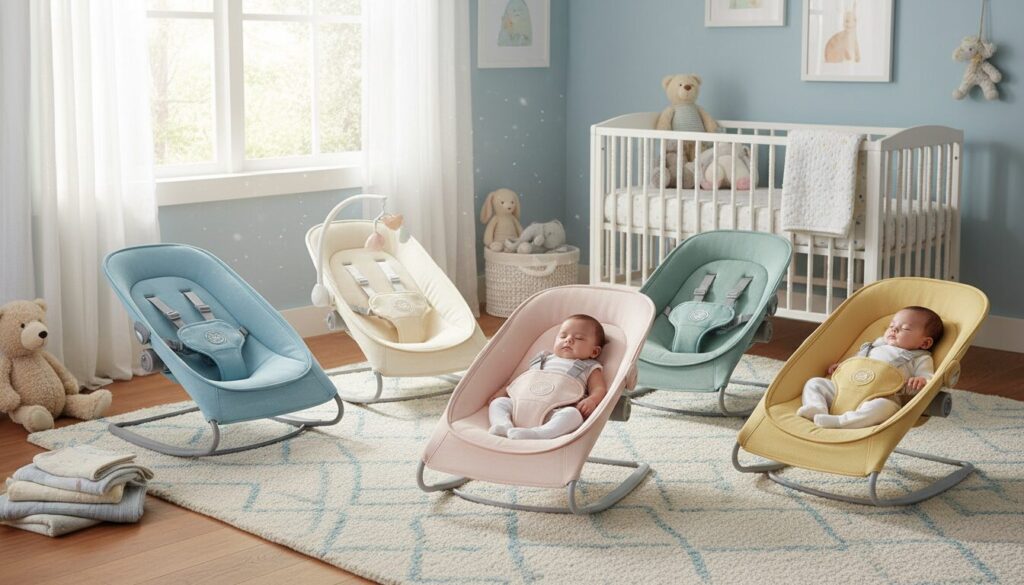
The use of a three-point harness (or five-point depending on the model) is recommended to maintain the child’s position and prevent tipping. The bouncer must be placed on a flat, stable surface, away from table edges and hazardous areas.
It is crucial not to leave a baby sleeping unsupervised in a bouncer. Longer rest periods should occur in an environment adapted for safe sleep. The bouncer remains relevant for short naps, resting after a bottle, or waking periods in the presence of an adult.
When to avoid the bouncer
Babies with respiratory problems, frequent regurgitations, or altered muscle tone should receive medical advice before prolonged use of the bouncer. Likewise, if the baby starts to roll over or tries to sit up, it is time to limit use until a more suitable seat is available.
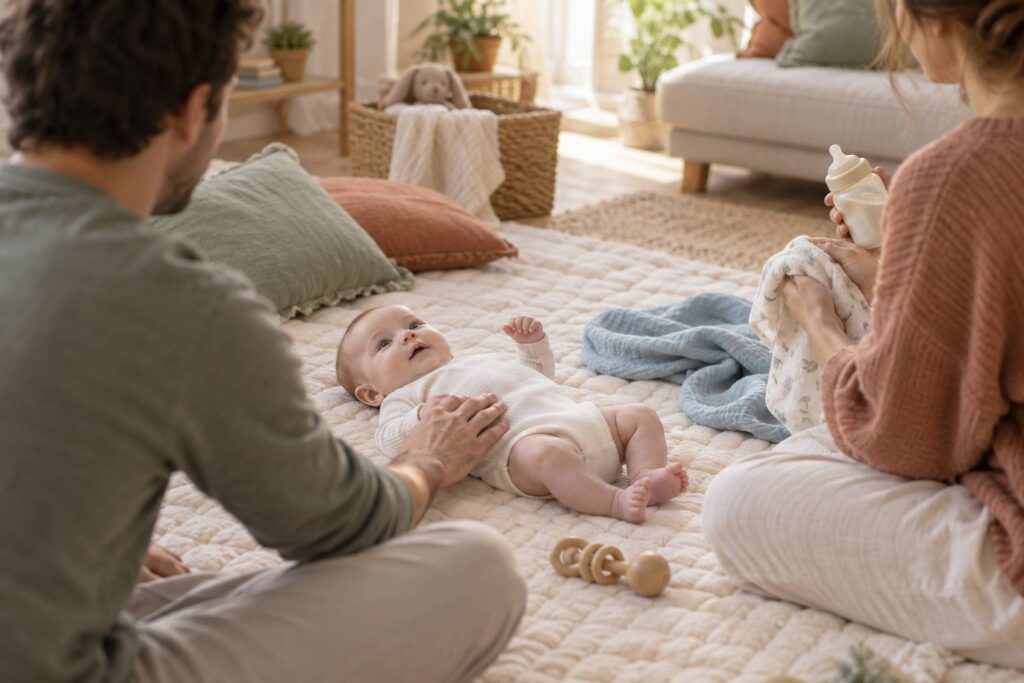
In daily life illustrated by Camille and her little Léo, the bouncer is mainly used when adult vigilance is possible: meal preparation, reading near the couch, bath prepared within sight. The goal: ensure baby rest without replacing human supervision.
Practical tips: reduce the incline for naps after a bottle, regularly check strap wear, remove any non-certified cushions or accessories. These simple actions reinforce baby safety while maintaining baby comfort.
Key insight: a well-used bouncer combines appropriate posture, reliable harness, and active supervision to offer secure and comfortable resting moments.
Choosing an evolving bouncer: baby ergonomics and durability
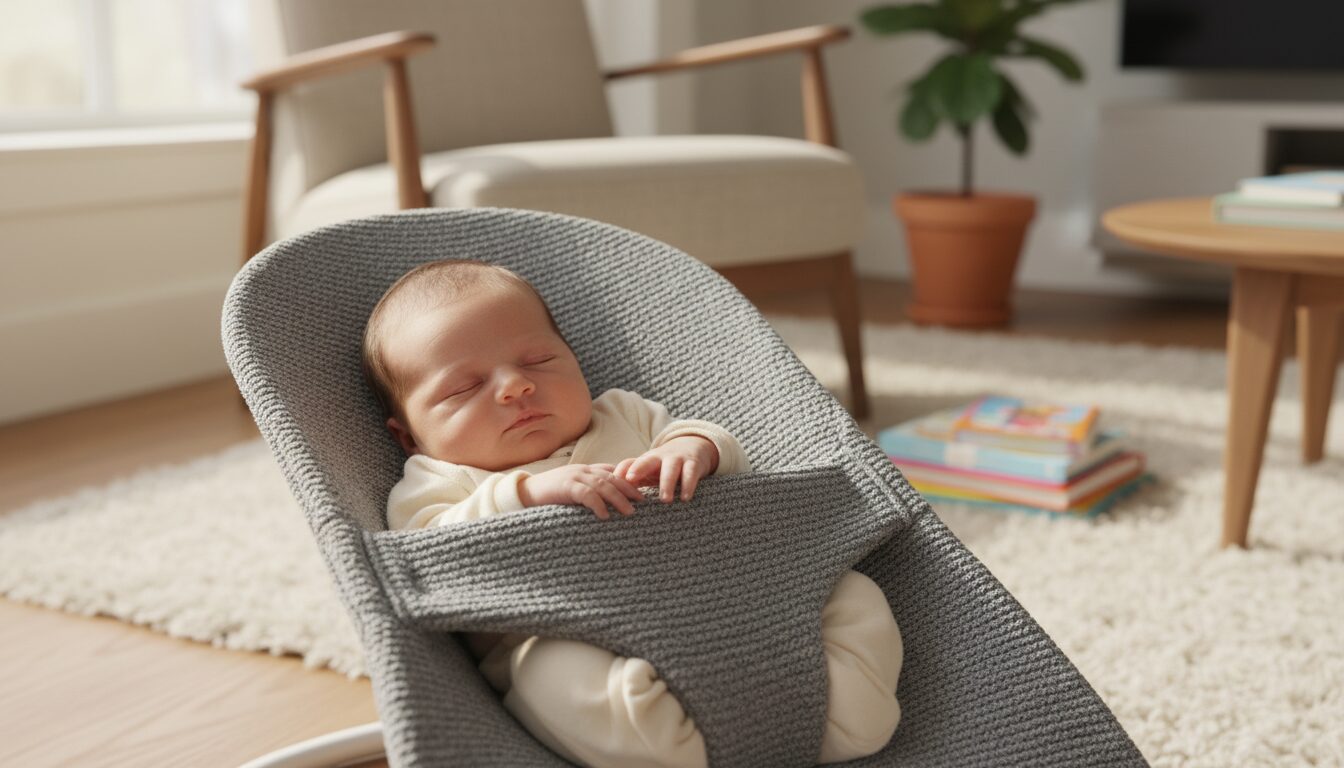
The choice of an evolving bouncer is based on several technical and practical criteria. An evolving model adapts to growth: adjustment of recline angle, more upright seating position, or even conversion into a high chair on some products. This can be a worthwhile investment if ergonomics are maintained at each stage.
The quality of baby ergonomics is crucial. The seat must conform to the infant’s body shape, support the spine, and distribute pressure points to avoid discomfort. Removable cushions and multiple adjustments are signs of a thoughtful design.
Materials and health safety
The chosen materials affect both comfort and health: fabric breathability, ease of cleaning, and absence of irritating substances. Hypoallergenic materials are particularly suitable for sensitive skin and possible family atopy history. It is advisable to check labels, composition, and whether covers can be machine washed.
Concrete example: the Compact Evolving bouncer from certain brands allows use from birth and features a removable, washable cover, which reduces the risk of irritations and facilitates daily maintenance. This type of option reassures parents and extends the lifespan of baby furniture.
Practical aspects and durability
A well-designed evolving bouncer combines lightness, stability, and a simple locking system. Parents who travel often will appreciate compact and portable models, while others will prioritize a heavier base for greater stability at home. The presence of an automatic locking mechanism and a clearly indicated maximum supported weight are useful guarantees.
A common thread: Camille chose an evolving bouncer because her family travels frequently. The selected model offers three recline positions, a washable cover, and materials tested free of phthalates. After several months of use, the adaptability of the bouncer proved to be an asset for following Léo’s developmental stages.
Key insight: investing in an evolving bouncer is justified if ergonomics, materials, and adjustment options remain suitable at each age to guarantee comfort and durability.
Bouncer and stimulation: integrating the baby bouncer with baby furniture and routines
The bouncer is not just a resting place: it is also a place for stimulation. Placed in the living room, near a window, or at the family table, it allows the baby to observe, hear, and participate in exchanges. Well positioned, it harmoniously integrates with existing baby furniture and daily routines.
Visual and auditory stimulation must remain appropriate: toys hung within reach, contrasting textures, and soft sounds encourage stimulation without overstimulation. The use of certified baby accessories, such as an activity arch, can turn a rest moment into an active observation session.
Practical list of accessories and uses
- Activity arch with removable elements to develop grasping skills.
- Light and secure rattle, attached by a short strap to avoid any entanglement risk.
- Play mat placed in front of the bouncer to encourage gaze movement to hands and feet.
- Hypoallergenic sensory cushion to vary textures.
- Position facing the parent during calm times to foster bonding and language development.
Each of these points is explained: the arch stimulates hand-eye coordination, the rattle reinforces auditory exploration, and facing the parent supports social learning. These accessories should be used under supervision and attached according to manufacturer recommendations.
Helpful video: a short and educational demonstration often helps visualize the optimal installation of the bouncer in the living room and choose compatible accessories.
In practice, Camille placed the bouncer in a naturally lit corner of the living room. Léo thus discovers faces and objects without being isolated. This arrangement promotes rest while stimulating awakening and strengthens the family bond.
Key insight: well integrated into baby furniture and complemented by suitable baby accessories, the bouncer becomes a safe and stimulating space for short periods.
Daily practices: cleaning, maintenance, transport, and baby safety
Maintaining a bouncer directly affects the product’s longevity and the baby’s health. A simple routine including regular washing of the cover, checking straps, and inspecting joints avoids unpleasant surprises. Machine-washable materials greatly simplify parents’ lives.
Care instructions must be followed: washing temperature, authorized products, and drying. Stain-resistant fabrics facilitate use, but it must be ensured that they remain compliant with health standards. Hypoallergenic materials and treatments without harsh products should be favored.
Transport and mobile use
For mobile families, portability is a key criterion. So-called nomadic or compact bouncers fold easily and fit in a car trunk. Camille illustrates this point: during a weekend at friends’ house, the compact bouncer proved indispensable to keep Léo in a known and safe space. The peace of mind for parents is immediate.
Before each trip, checking fastenings and tightening screws helps avoid incidents. On travels, a small storage bag protects the fabric and prevents soiling.
Safety and maintenance
Regularly examining fastenings, strap condition, and structural stability should be part of parental routines. A weekly visual check is often sufficient: test locking, gently pull on support points, ensure there is no excessive play.
Helpful video: a short technical video showing how to disassemble and reassemble a shell or clean a cover is a good complement to written instructions.
When buying second-hand, checking the manufacturing date, absence of modifications, and parts availability protects against risks. Some brands offer after-sales service that reinforces trust in use.
Key insight: regular maintenance, simple checks, and special attention to transport ensure safety and prolong the daily usefulness of the bouncer.
Criteria for a confident purchase: practical buying guide and mistakes to avoid
The buying guide for an effective bouncer begins with setting priorities: usage (occasional, daily, mobile), desired duration of use (evolving or temporary model), and domestic constraints (space, ease of cleaning). These elements guide towards the most suitable range.
Budget is not the only criterion: a cheap model may suffice for occasional use, whereas a more expensive model will often offer more adjustments, higher quality materials, and increased durability. Manufacturer warranties are also an indicator of trust.
Quick comparison table
| Model | Recommended age | Strengths | Note |
|---|---|---|---|
| Doomoo Nid (example) | From birth | Enveloping comfort, soft materials | Ideal for home, less mobile |
| Compact Evolving Bouncer (example) | From birth up to 30 kg | Multiple adjustments, light and portable | Good choice for mobile families |
| Bliss Bouncer (example) | From birth | Design, evolving, durable | Long-term investment |
| Easy Bouncer (example) | Birth to 9 kg | Simple, economical | Limited-time use |
Common mistakes to avoid: choosing a bouncer solely for its design without checking comfort, buying second-hand without checking parts, or neglecting ease of maintenance. An in-store test, if possible with a cushion simulating an infant, helps perceive the seat and recline.
Buying advice: favor a model with clear documentation, available spare parts, and verified user feedback. Parental reviews complemented by store trials offer a realistic view of performance.
Simple action to test: next time a parent visits a store, try adjusting the recline and pulling the harness to check sturdiness. This small gesture can prevent big disappointments.
Key insight: a confident purchase combines practical tests, technical checks, and prioritization of real needs to ensure a bouncer suited to the family.
At what age can a baby bouncer be used?
A bouncer can be used from birth for short periods, provided the model is designed for newborns and offers good head support. It should not replace a bed for prolonged sleep.
How long can a baby stay in a bouncer?
It is recommended to limit the time in the bouncer: a few tens of minutes at a time, with active supervision. The bouncer is for rest and stimulation, not unsupervised sleep.
How to choose between a mobile model and a fixed model?
Choice depends on use: mobile for traveling families and outings, fixed for daily use at home. Check stability, ease of folding, and cleaning according to needs.
Should hypoallergenic materials be prioritized?
Yes, especially if there is a family history of atopy. Hypoallergenic materials reduce irritation risks and facilitate cleaning, contributing to baby comfort and safety.