
In short:
- Tribute: celebrating grandmothers strengthens intergenerational bonds and protects family memories.
- Practical tenderness: simple gestures, stories, and rituals convey affection without pressure.
- Family and parenting: the involvement of elders promotes the well-being of young children and relieves parents.
- Concrete tools: albums, recordings, memory boxes, and annual rituals for lasting respect.
- Immediate action: choose a small affectionate gesture to try today to offer a moment of celebration.
Why paying tribute to grandmothers renews family bonds
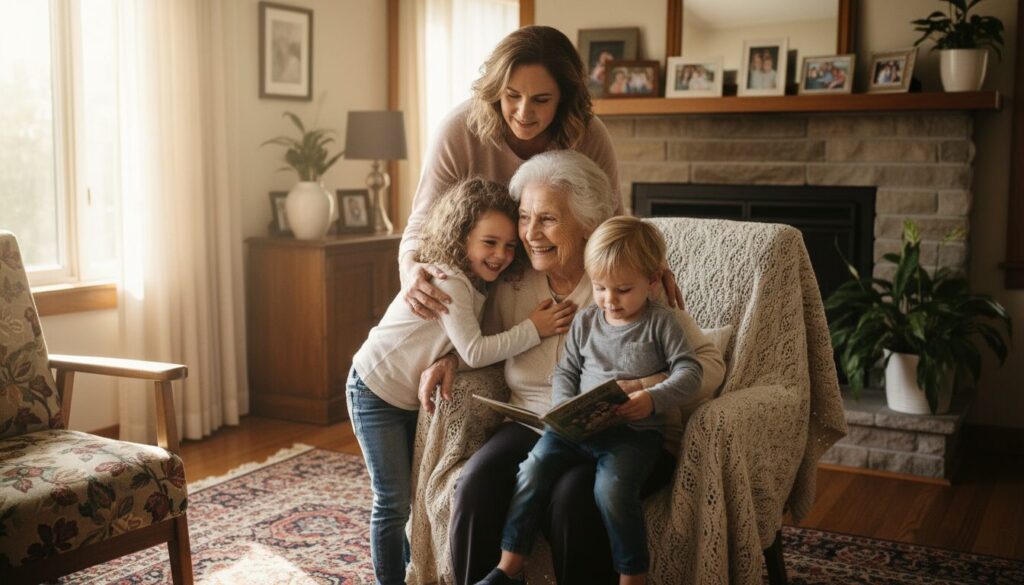
Paying tribute to grandmothers is not just a formality: it is a way to acknowledge the intangible contribution each elder has given to her family. This gesture carries emotional and social significance. It creates continuity between generations and offers the youngest stable emotional landmarks.
Considering grandmothers as pillars means accepting that they have shaped behaviors, recipes, songs, and values. These elements, passed down orally, form a living family heritage. Transmission rituals—telling a story, cooking a recipe, singing a lullaby—materialize bridges between the past and present.
Concrete example: the Martin family
The Martin family illustrates this guiding thread. Madeleine, the matriarch, shared her recipes and childhood stories with her grandchildren. Every Sunday, a “memory snack” gathered three generations. This moment allowed the youngest to learn patience and empathy, and the parents to see their educational practices enriched by another perspective.
On a psychological level, the tribute supports family identity. Children who grow up knowing their ancestors’ stories develop a stronger sense of belonging. This does not erase potential tensions but offers common ground for discussion, repair, and learning.
Why it is useful for parents
For tired or uncertain parents, recognizing the role of grandmothers brings concrete relief. Receiving kind advice, practical help with childcare, or simply being heard restores daily balance. Parents can thus experiment with other educational approaches without feeling judged, provided parental choices are respected.
Valuing this role involves simple gestures: sharing a cup of tea, asking for a specific memory, inviting the grandmother to participate in a routine. These actions create an atmosphere of trust and respect, strengthen affection, and avoid unnecessary conflicts. They show that the tribute is as much for the living as for family memory.
Insight: an authentic tribute weaves lasting links between generations and becomes an emotional resource for the whole family.
Concrete ideas to celebrate a grandmother: gestures, gifts, and shared moments
Celebrating a grandmother can take many different forms, adapted to the elder’s age, mobility, and tastes. The essential thing is to favor tenderness and personalization rather than expense. Here are ideas tested by families and recommended by early childhood professionals.
Daily gestures and simple rituals
A weekly video call, a handwritten letter, or an audio recording of a story are concrete ways to bring joy. These gestures signal regular attention and create a red thread in the relationship. They are especially precious if geographic distance separates generations.
For in-person interactions, establishing a ritual—like a Sunday walk or a shared knitting session—pays tribute to the grandmother while providing support to the parents. These moments allow observation of different parenting skills, sometimes very useful for managing the baby or young child.
Meaningful gifts
Effective gifts are those that evoke memories or facilitate closeness. A photo frame holding an intergenerational photo, an album of the grandchild’s “firsts,” or a family memory box are more valuable than an expensive object. It can be relevant to involve children: a drawing, a handprint, or a small video of a shared moment will have strong emotional value.
- Personalized photo album: include captions and dates to pass on landmarks to future generations.
- Memory day: organize a gathering where everyone tells a family anecdote, recorded for the archive.
- Softness kit: a homemade blanket, a bag of herbal teas, or a playlist of favorite songs.
These ideas come with concrete examples of implementation. For instance, preparing a “recipe book” where each family member writes a recipe and adds a memory linked to this dish. This book then becomes a living family archive and an emotional resource for children.
For those who want to go deeper, the site laviedebebe.com offers practical sheets to organize intergenerational rituals, with tips validated by early childhood professionals. These resources emphasize respect for parental choices and gentle approaches.
Insight: a simple gesture, repeated consistently, has more impact than a large single event.
Passing on memories and family history: practical tools
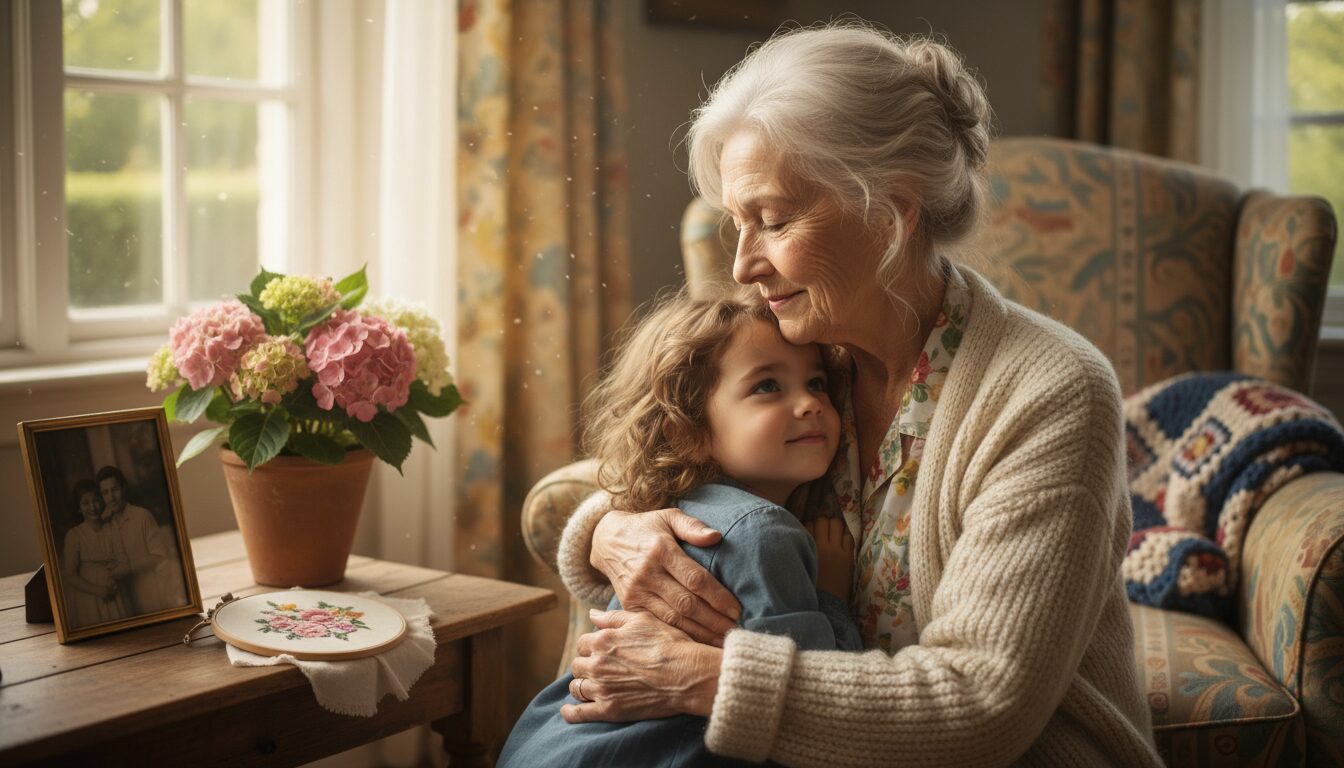
Passing on family history requires concrete tools so that memories remain accessible and alive. The media can be digital or physical, depending on the grandmother and parents’ habits. The goal: preserve stories, images, and objects while respecting everyone’s sensitivity.
Recommended tools and their use
Here are proven methods, easy to implement. Audio recordings of a grandmother telling about her childhood, an album with captions, or a box containing meaningful objects are ways to materialize memories. Each of these tools can be used progressively, without stress.
| Tool | Usefulness | Practical advice |
|---|---|---|
| Audio recording | Captures voice and anecdotes | Ask for a short story per session to avoid fatigue |
| Captioned photo album | Associates images and contexts | Add dates and small notes from family members |
| Memory box | Keeps objects, letters, and menus | Create a written inventory to facilitate consultation |
The recommended progression: start with small tasks. A five-minute recording recounting a childhood memory is more accessible than a one-hour session. Parents can plan a sequence of small captures that, combined, form a rich archive.
Steps and concrete examples
Step 1: identify a suitable format. If the grandmother is comfortable with digital tools, video recording can be favored. Otherwise, a handwritten notebook works very well. Example: in the Dupont family, each grandchild asked the grandmother three questions during a family workshop; the answers were transcribed and illustrated.
Step 2: structure the collection. Prepare a list of themes (childhood, jobs, holidays, recipes). This helps the grandmother find her bearings and avoids dispersion. Practical example: a “memory calendar” where each Sunday a theme is addressed and added to the family archive.
Step 3: share and preserve. Documents must be accessible but protected. Digital scans, cloud backups, and physical copies ensure durability. Always ask for consent and respect the grandmother’s wishes regarding dissemination.
Insight: transmission is organized in small coherent steps, to preserve dignity and authenticity of memories.
The role of grandmothers in child development: affection, security, and transmission
Grandmothers often play an essential role in the socio-emotional development of children. Their presence brings a particular affection, often a source of calm and security. This relationship has measurable effects on the child’s well-being and family dynamics.
Emotional and practical effects
A child who benefits from warm interactions with a grandmother develops secure attachment skills. Simple exchanges—reading a book, a hug after a fall, lullabies—strengthen emotional regulation. Grandmothers also bring a different vision of parenting, often more patient and narrative.
Practically, a grandmother can help establish reassuring routines: helping with bath time, telling a story before nap, or participating in learning meals. These actions allow parents to breathe and children to learn to navigate between different attachment figures, which is beneficial for their resilience.
Examples and recommendations for parents
Recommendation 1: define clear frameworks. Cooperation works better when there is mutual respect for parental choices. Explaining routines and limits to the grandmother avoids misunderstandings.
Recommendation 2: favor quality time shared. Half an hour of focused attention is better than a whole day of activity without meaningful interaction. For example, reading three short stories each week creates a ritual stronger than long but scattered visits.
Recommendation 3: involve the grandmother in educational projects. Practical suggestions (songs, sensory games, traditional tales) enrich the family’s educational repertoire. Laviedebebe.com offers sheets to include elders in the child’s routines respectfully and effectively.
Insight: the presence of a grandmother, when harmonized with the parents, promotes the child’s emotional balance and enriches family life.
Respect, tenderness, and memory: creating a lasting tribute for future generations
Building a lasting tribute involves combining respect, creativity, and method. It is not just a one-off event, but a set of gestures and tools that allow future generations to know, understand, and feel the transmitted love.
Annual rituals and family archives
Establishing an annual ritual—a sharing day, a simple celebration around a meal, or a group reading moment—helps perpetuate the tribute. These rituals become seasonal landmarks for the family and strengthen cohesion. For example, the “story day” where everyone brings a story transformed the relationship between members of the same family into a real tradition.
Creating a physical and digital memory chest is another lasting step. Keeping photos, letters, recordings, and objects there builds accessible memory. A good practice is to document each item: name, date, meaning. This facilitates transmission to younger generations who often reuse these archives for school or personal projects.
Immediate actions to try
Here is a list of simple actions to try at the next visit or call:
- Ask for a recipe and cook it together, noting the associated story.
- Record a two-minute anecdote on the phone and save it.
- Create a card where each member writes a sweet word and puts it in the memory box.
These small gestures are easy, inexpensive, and immediately meaningful. They nurture tenderness and establish sharing habits. They ensure that the tribute does not remain symbolic but becomes a living bridge between generations.
Insight: a lasting tribute is built by repeating simple gestures, marked by affection and respect, which make memories accessible and alive for the family.
How to involve a grandmother who lives far away?
Organize regular video calls, send audio recordings or postcards, and create a shared transmission notebook. These simple actions maintain closeness despite the distance.
Which gifts have the most emotional value?
Personalized gifts: captioned photo albums, handwritten family recipes, or objects made by children. The essential thing is meaning rather than price.
How to include the grandmother while respecting parental choices?
Communicate clearly, explain routines and boundaries, and propose specific tasks (reading, quiet games). Dialogue and mutual respect are essential.
What to do if the past evokes painful memories?
Approach stories gently: respect the grandmother’s pace, avoid intrusive questions, and offer emotional support if necessary. Memory can be preserved without forcing speech.