
In brief:
- Lilith is a name rich in history, blending Mesopotamian roots with influences in the Hebrew tradition.
- Its etymology refers more to the concept of wind and nocturnal creatures than to a simple translation of “night”.
- In mythology, Lilith has contradictory incarnations: a rebellious figure, a symbol of independence, or a disturbing image depending on the era.
- For parents today, Lilith evokes strong symbolism related to the feminine and a determined personality; some practical tips help support a child bearing this name.
- Resources to accompany the early days and the choice of the name are available, such as dedicated articles on reading an example name sheet or simple ideas to try at home, e.g. craft activities found on practical guides.
Lilith: origin, etymology and linguistic roots of the name
The quest for the origin of a name begins with its etymology. For Lilith, the linguistic trail goes not only to familiar Hebrew, but further back, to ancient Mesopotamia.
The name appears as a Hebrew adaptation of an Akkadian term, itself derived from Sumerian. Rather than being limited to the popular translation “night”, experts connect Lilith to notions of wind and nocturnal entities: Semitic and Mesopotamian roots converge towards images of breaths or spirits linked to the night.
Concrete illustration: in an academic register, it is often explained that the Hebrew form derives from the Akkadian word lilītu (feminine of lilu), which itself comes from Sumerian líl. This linguistic lineage changes the perspective: Lilith becomes less a metaphor for darkness and more a dynamic symbol, in motion.
For the fictional couple Clara and Marc, who browse name dictionaries before birth, this nuance is precious. They learn that choosing Lilith does not mean opting for a “dark” name, but for one that carries a multilayered history and an almost elemental energy.
Practically speaking, when a parent researches the meaning of a name today, it is helpful to examine several sources: ancient texts, etymological studies, and contemporary interpretations. This allows understanding of semantic evolution: a word that could evoke a nocturnal spirit in Antiquity may become a symbol of autonomy in a modern culture.
Practical example for parents: note three different definitions found (Sumerian origin, Akkadian adoption, Hebrew reading) and briefly explain to those around why these meanings form a coherent story around the name. This contextualization work helps avoid misunderstandings and builds confidence in the choice.
Finally, it is important to clarify that etymology alone does not fix the emotional destiny of a name. For neonatal teams and relatives, understanding these roots simply provides a clear and affirmed explanation to parents seeking a deeper meaning.
Insight: understanding the etymology of Lilith frees the name from simplistic myths and reveals its historical richness.

Lilith in mythology: stories, variations and cultural heritage
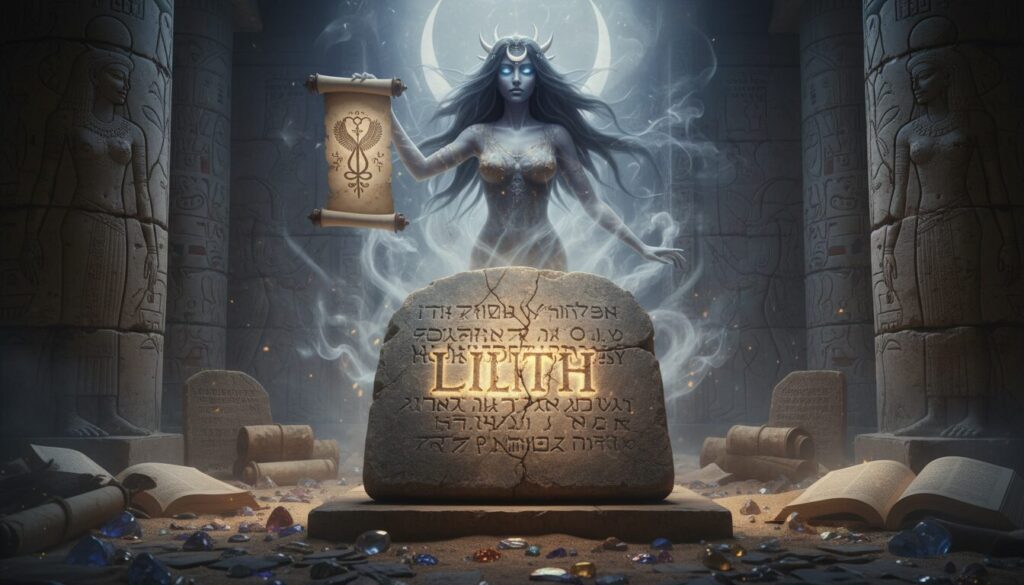
The place of Lilith in mythology is complex and has undergone many metamorphoses. According to traditions, she can appear as Adam’s first companion, as a night demon, or as a figure of female resistance.
In some ancient readings, notably apocryphal texts and medieval Jewish legends, Lilith is described as a woman created at the same time as Adam who refuses to submit. This narrative highlights a moral and social prism, but it has also served as a matrix for varied reinterpretations over the centuries.
Another mythological track: in Mesopotamia, creatures called lilītu or lilu are linked to storms and winds. They were not necessarily demonic in the modern sense but embodied potentially dangerous natural forces. This origin anchors Lilith in a register that is not purely moral, but cosmological.
For Clara and Marc, these stories offer multiple angles. Some family members associate Lilith with a rebellious image, others with a disturbing figure. Faced with this diversity, parents can choose to explain the name emphasizing the version that best matches their values— for example, that of a free and determined woman rather than that of a demon.
Contemporary culture then reappropriated Lilith creatively: literature, music, visual arts, and feminist studies have often transformed her into a symbol of emancipation. Contemporary female writers and artists draw inspiration from her and offer a positive rereading, an important point when evaluating the societal impact of a name.
Cultural example: in recent creations, Lilith may appear as the heroine of a contemporary novel or as a character name in a television series. These uses influence collective perception and can make the name more familiar and less laden with apprehension.
A practical observation for parents: when a name has a dense mythological past, it is useful to speak openly about it with the entourage, proposing readings or references that reflect the desired message. This helps control the social narrative around the name.
Insight: the mythology of Lilith is multiple; reinterpreting her story allows making it a meaningful name aligned with contemporary values.
Meaning, feminine symbolism and contemporary interpretations
The meaning of Lilith varies according to time and culture, but it retains a symbolic core: connection to movement (wind), to the night, and to a form of autonomy. This mix nourishes an ambiguous image that modern society can transform into a positive force.
Symbolically, Lilith is often associated with the notion of female freedom. For parents wishing to give a name that encourages self-assertion, Lilith can appear as a deliberate choice. It conveys an idea: that of a young woman capable of setting her limits and pursuing her goals.
In the emotional domain, it is useful to distinguish the historical symbolism from current usage. A name can carry a mythological heritage while being ordinary in daily life. Recent cultural practices have largely neutralized old fears, emphasizing empowerment rather than threat.
To support a child named Lilith, some concrete gestures help anchor positive symbolism. For example: telling empowering stories about the name from early childhood, associating soft family rituals (bedtime reading, chosen music tracks) and encouraging activities that foster self-confidence. These practices illustrate how the meaning attributed to the name is built daily.
Practical list for parents:
- Explain the name with age-appropriate readings.
- Choose a loving nickname if desired (e.g. Lil, Lili) to soften the sound.
- Associate the name with positive rituals from the first months.
- Encourage cultural outings and discovery games, as Lilith is traditionally linked to intellectual curiosity.
- Discuss the chosen meaning of the name with relatives to homogenize the social representation.
A concrete case: a maternity service observed that families who tell a positive story about the name from the first months promote better identity appropriation in the child. This aligns with the developmental approach, which emphasizes the quality of parent-child interactions.
Insight: the symbolism of Lilith can be transformed into an educational and emotional resource if parents support it with simple and daily gestures.
Character, personality and how to support a child named Lilith
Character descriptions associated with Lilith often evoke strong determination and a taste for challenges. These traits can be real assets if recognized and accompanied with kindness.
Typology: Lilith is described as ambitious, rigorous, and sometimes too relentless. As a child, she enjoys cultural outings and needs activity. This profile calls for balanced support: encouraging effort without letting the child overwork herself.
To illustrate, consider the driving family story: Clara and Marc notice early on that their imagined daughter Lilith is curious and persistent. Rather than restrain this energy, they organize structured activities: discovery workshops, museum visits adapted to toddlers, and short playful missions that value completed effort.
Practical advice for parents:
- Offer progressive challenges: small goals allowing celebration of each success.
- Remind the importance of free play to relax the serious mind.
- Provide moments of calm and listening to avoid emotional exhaustion.
- Use caring routines to structure the need for activity without rigidity.
Concrete example: a post-nap ritual combining 10 minutes of light reading with a cuddle and a song. This small shared time teaches the child to alternate effort and relaxation.
In school settings, Lilith will probably need teachers who value perseverance but know how to channel energy towards cooperation. Parents can share these observations with the educational team to build coherent support.
Finally, it is recommended to choose jewelry or symbolic objects (e.g. a lucky stone like emerald, traditionally associated with the name) to create emotional anchors. These objects become reassuring anchors during times of change.
Insight: recognizing Lilith’s determined nature allows orienting support towards a balance between stimulating challenge and restorative rest.
Lilith today: popularity, celebrities, cultural implications and practical resources
The name Lilith has experienced a resurgence in artistic and alternative circles, while remaining relatively rare in official records. Its popularity is driven by public figures and contemporary cultural representations.
Among personalities bearing this name are artists and creators: Lilith Saintcrow (author, born 1976), Lilith Stangenberg (actress, born 1988), Lilith Nagar (singer and host, born 1935) and Lilith Häßle (stage actress, born 1991). These trajectories show the diversity of paths possible under this name.
| Name | Year of Birth | Profession | Note |
|---|---|---|---|
| Lilith Saintcrow | 1976 | Writer | Known for fantasy and contemporary novels |
| Lilith Stangenberg | 1988 | Actress | Awarded in theater and cinema |
| Lilith Nagar | 1935 | Singer / Host | Longstanding media figure |
| Lilith Häßle | 1991 | Theater actress | Emerging on contemporary stages |
For curious parents seeking practical resources, platforms like la Vie de Bébé offer guides of activities and concrete ideas for the first months. Other pages dedicated to names provide comparative sheets that help choose with full knowledge, such as an example sheet accessible via a dedicated names dossier.
Practical case: a hesitant parent can list the advantages of the name (sound, symbolism, originality) and potential disadvantages (social perception, rarity), then test reactions from their circle by using simple tests: calling the future baby by the name during preparation moments or noting how it fits into family conversations.
In 2026, interest in historic and symbolically rich names continues to grow, driven by a desire for authenticity and meaning. Lilith meets this expectation: an atypical name that allows displaying values of independence and strength while fitting into a millennial history.
Insight: Lilith combines modernity and historical depth, offering parents an option both original and symbolically strong.
What is the real origin of the name Lilith?
The linguistic root of Lilith comes from Sumerian and Akkadian, then adopted into Hebrew. Rather than strictly meaning “night”, the name refers to wind or nocturnal entities, and has been reinterpreted in various mythological stories.
Is Lilith too strong a name for a child?
The perceived strength of the name depends on cultural interpretation. Associated with independence and determination, Lilith can be placed within a balanced educational path that also values relaxation and cooperation.
How to explain the name Lilith to family members who wonder?
Offer a nuanced reading: present the etymology, recall positive contemporary reinterpretations, and share recent cultural references to contextualize the choice.
Are there affectionate nicknames for Lilith?
Yes: Lili, Lil, or even creative diminutives. A soft nickname can soften the sound and provide a familiar alternative in daily life.