In brief:
- Perineal rehabilitation is a key step in the postpartum period to regain tone and reduce the risk of urinary incontinence or prolapse.
- The first evaluation takes place during the postnatal visit; midwife and physiotherapist are the primary professionals involved.
- Three main methods: manual examination, biofeedback, and electrostimulation, often combined with Kegel exercises.
- Simple actions at home (false thoracic inspiration, vaginal cones, progressive Kegel routine) complement the rehabilitation in the clinic.
- Health insurance reimburses prescribed sessions and non-invasive solutions exist before considering surgery.
Perineal rehabilitation after childbirth: understanding the role of the pelvic floor
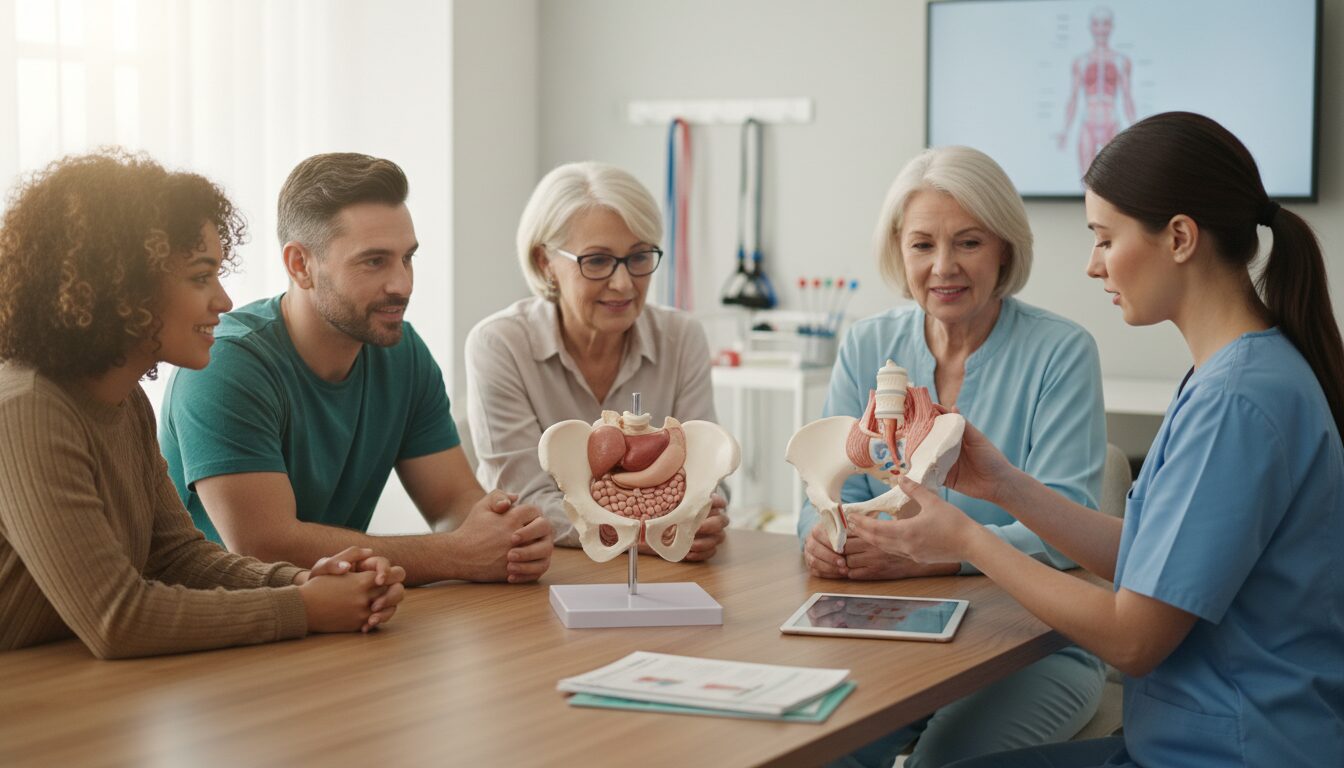
The perineum, often called the pelvic floor or perineal muscles, functions like a hammock between the pubis and the coccyx. It supports the bladder, uterus, and rectum, and controls the urogenital and anal openings. After pregnancy and childbirth, these muscles can become stretched or less responsive, hence frequent symptoms such as small leaks or a feeling of pelvic heaviness.
To illustrate, Sophie, mother of a newborn, experienced discomfort during exertion and a frequent need to urinate during the first postpartum month. This observation is common: many young mothers notice signs of pelvic weakness in the weeks following birth. It is often a recovery phase but one that deserves appropriate attention.
The perineum consists of several muscle layers, including the levator ani and the pubococcygeus muscles. These structures are involved not only in continence but also in pelvic stability and intimate life. Targeted work on these muscles supports the maintenance of pelvic organs and improves long-term sexual sensitivity.
The causes of weakening are multiple: weight of the uterus during pregnancy, hormonal variations, episiotomy, tears, prolonged labor, or cesarean section. Even if cesarean sometimes preserves superficial tissues, pregnancy itself places significant strain on the pelvic floor. Recognizing these factors helps adapt the postpartum rehabilitation strategy.
An important point is the distinction between temporary symptoms and signs requiring thorough assessment. Small leaks when laughing or exerting effort are frequent. In contrast, marked incontinence, persistent pain, or a sensation of a vaginal mass should lead to specialized evaluation.
For Sophie, the first useful step was to address the issue without guilt during the postnatal visit. A competent professional explained that rehabilitation is not a universal obligation but a valuable aid to prevent worsening and protect female health in the medium and long term.
Insight: considering the perineum as a muscle to retrain, not as a shameful problem, transforms the approach and encourages practical and calm decisions.
When to start postpartum rehabilitation and whom to consult?
The question of timing often comes up. Autonomous rehabilitation — simple exercises performed by the patient alone — can begin from the first postpartum week, with expectations of sometimes weak but progressive muscular responses. Supervised sessions by a professional usually start between 1 and 3 months after delivery, taking into account the scar condition and breastfeeding.
The postnatal visit, carried out six weeks after childbirth, is the key moment to assess pelvic floor tone. Depending on the examination, the professional prescribes or not perineal rehabilitation sessions. Recommendations from learned societies have evolved; they emphasize that systematic rehabilitation in asymptomatic patients is not proven to prevent long-term incontinence, but the choice remains adapted to individual feelings and context.
Midwife or physiotherapist? Both professions are qualified. The midwife naturally intervenes in immediate post-delivery and postnatal follow-up. The physiotherapist can offer support before and after birth, sometimes more focused on muscle strengthening and overall recovery. For severe cases, an assessment at a specialized center including urodynamic tests and ultrasound may be necessary.
A practical overview: about 30% of women show no symptoms, 40% have mild distension often requiring 10 to 15 sessions, and 30% show more marked impairments needing thorough assessment. These ranges help situate, while reminding that each pathway is unique.
Simple comparative table of professionals and situations:
| Professional | When to consult | Strengths | Indications |
|---|---|---|---|
| Midwife | Postnatal visit (6 weeks) and immediate follow-up | Comprehensive postpartum approach, practical advice | Initial rehabilitation, pain, breastfeeding advice |
| Physiotherapist | Before and after childbirth | Muscle strengthening, functional rehabilitation | Significant weakness, long rehabilitation, physical preparation |
| Specialized center | Persistent symptoms or prolapse | Additional examinations (urodynamic, imaging) | Severe incontinence, suspected prolapse |
Reimbursement is reassuring: health insurance covers 100% of prescribed sessions with a midwife or physiotherapist. Thus, access to postpartum rehabilitation is facilitated.
For Sophie, the choice was based on how she felt: an initial consultation with a midwife followed by a session cycle with a physio allowed for a personalized plan. Final insight: contacting a professional quickly allows adjustment of care and limits the risk of unfavorable progression.
Perineal rehabilitation techniques: manual, biofeedback, electrostimulation, and Kegel exercises
A typical session always starts with a manual assessment. Vaginal palpation allows the professional to evaluate strength, repetitiveness, and holding of pelvic floor contractions. This is an essential step to choose the best-suited tools.
Three complementary techniques are used:
- The manual method: learning contractions, locating muscles, progressive strengthening.
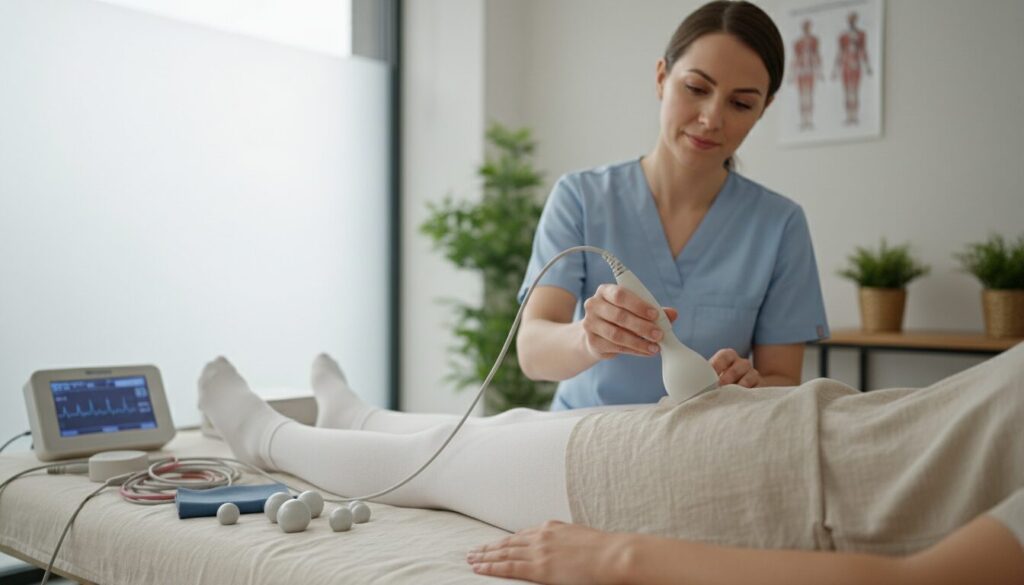
- Biofeedback: a probe connected to a screen visually displays contraction intensity, helping awareness and exercise precision.
- Electrostimulation: a probe delivers low electrical impulses causing involuntary contractions to activate muscle fibers difficult to mobilize voluntarily.
Most modern devices combine biofeedback and electrostimulation, optimizing the work. For example, in cases of urgency urinary incontinence (urgent need to urinate), electrostimulation can be particularly useful while basic strengthening is done through manual work and Kegel exercises.
Practically, a session generally lasts 30 to 45 minutes. After an initial assessment, the patient performs guided contraction series then works with biofeedback as needed. Electrostimulation is considered if voluntary contractions are insufficient. Between sessions, exercises at home are essential to consolidate progress.
Complementary tools exist: vaginal cones which enable using the natural holding mechanism to strengthen the perineum, and geisha balls which, when well chosen and used with care, can help tonicity. Neuromuscular stimulation devices intended for home use are an option for some patients after professional advice.
An educational video can complement the demonstration and help with practical application:
In practice for Sophie, the session began with gentle palpation, followed by learning short and long contractions. Biofeedback facilitated awareness: seeing the screen and feeling the area working reassures and motivates. Final insight: combining techniques maximizes efficiency and adapts to specific needs.
Practical home program: routines, exercises, and daily tips to strengthen the perineum
Rehabilitation is not limited to the clinic. Integrating a home program is crucial for muscle strengthening. Exercises should be simple, progressive, and doable daily, even with a baby in arms.
Here is a practical and safe routine, to adapt according to professional evaluation:
- Awareness (5 minutes): sit in front of a mirror. Contract the anus and feel the perineum raise. Breathe calmly between each contraction.
- Kegel exercises (3 sets): 10 short contractions (1-2 s) followed by 5 long contractions (10 s), with 30 s rest between sets. Repeat once or twice a day.
- False thoracic inspiration (2-3 repetitions): exhale fully, pinch the nose, and simulate an inspiration without drawing air in, to feel the lifting of the perineum and abdominals.
- Functional exercises: lock the perineum just before effort (cough, lifting) to learn active protection.
List of practical tips to try during the next nap:
- Controlled breathing during contraction.
- Combine a short contraction with a daily effort (lifting a bag, standing up from a chair).
- Use vaginal cones progressively (with professional advice) to increase load.
- Avoid sudden efforts and learn to distribute abdominal load during sports.
Some sports like jogging or intensive fitness increase intra-abdominal pressure and strongly strain the pelvic floor. It is preferable to first favor cycling, swimming, gentle yoga, or low-impact activities until satisfactory tone is recovered.
Follow-up and progression are essential: start with short sessions and gradually increase volume. Patients who combine clinic sessions and a regular home routine often see quicker and lasting progress.
Sophie integrated these exercises into her quiet moments (while breastfeeding seated or changing the baby). This small guiding thread allowed her to practice without pressure and achieve noticeable improvement after a few weeks. Final insight: regularity, even in small doses, creates concrete and reassuring results.
Possible complications, advanced options, and long-term follow-up in female health
Most patients recover thanks to appropriate care. However, when symptoms persist despite diligent rehabilitation, it is necessary to consider additional diagnostic and therapeutic steps. Examinations at specialized centers may include pelvic ultrasound, urodynamic studies, and radiological assessment.
Complications to monitor: persistent urinary incontinence, anal incontinence, chronic pain, or the appearance of a prolapse. If active rehabilitation (manual, biofeedback, electrostimulation) is insufficient, surgical solutions may be proposed. Among these, placing a sub-urethral sling such as TVT or TOT is a common minimally invasive procedure for stress urinary leakage.
Before any intervention, discussion between the patient and the multidisciplinary team must consider parental plans, functional impact, and the desire to preserve quality of life. Surgery can resolve stress leaks but should be part of a well-considered plan.
Long-term follow-up includes gradual return to sport once tone is sufficient, adapted abdominal rehabilitation that should only start when the perineum is restored, as well as daily preventive actions: locking the perineum before effort, avoiding carrying heavy loads, and treating aggravating factors such as chronic cough.
Resources and videos for further study:
Finally, prevention deserves mention: preventive rehabilitation during pregnancy, integrated into preparation classes, improves body awareness and facilitates postnatal recovery. This does not replace the postnatal visit but complements care.
For Sophie, vigilance and regular follow-up allowed treating an episode of urgency urinary incontinence before it progressed. She illustrates well that progressive, adapted, and guilt-free care is the key to a calm return to an active daily life. Final insight: anticipating, informing, and adapting care leads to better results and better quality of life.
When to start perineal rehabilitation after childbirth?
Autonomous rehabilitation can begin from the first postpartum week. Supervised sessions are generally offered between 1 and 3 months after childbirth, depending on clinical evaluation and scars.
Who to consult: midwife or physiotherapist?
Both professions are competent. The midwife naturally follows the postnatal period; the physiotherapist can offer targeted strengthening before or after birth. The choice depends on context and availability.
Are Kegel exercises enough?
Kegel exercises are an essential base. Depending on the state of the perineum, they are often complemented by biofeedback or electrostimulation. A professional assessment allows adapting the method.
Is rehabilitation reimbursed?
Yes. Health insurance reimburses 100% of prescribed sessions conducted by a midwife or physiotherapist.