Understanding the origin also helps to temper expectations: the celebration does not require large expenses but encourages presence and attention. This positioning helps parents to imagine rituals that are more sincere than ostentatious.
Key phrase: remember that Grandmothers’ Day was born of a late initiative but becomes a moment of authentic recognition when supported by simple and regular gestures.
History and Evolution: How the Celebration Became Part of Family Tradition
The history of Grandmothers’ Day shows a gradual appropriation by society. From the late 1980s, the media and businesses relayed the event; gradually, the custom spread within homes. The first Sunday of March became the annual landmark to express affection. This calendar encourages the emergence of repetitive habits, essential for a ritual to become a tradition.
The transformation of the celebration into a family rite passes through reproducible practices: cards, shared desserts, intergenerational activities. These acts feed the home’s collective memory and nurture the bond between grandmothers and children. The evolution also shows families’ ability to change the initial meaning to make it more humane and less commercial.
Cultural and International Differences
The way the event is celebrated varies by country. In Bulgaria, for example, the celebration takes place on the first Wednesday of December. In Poland, two separate days honor grandmothers and grandfathers in January. Some countries prefer a joint grandparents’ day: this is the case in the United States and Canada, where the celebration falls on the first Sunday of September. These differences reflect varying social rhythms and show that the logic of elder recognition is universal but ritualized in diverse ways.
For French families, the date at the beginning of March comes well before spring blossoms: giving flowers or a bouquet becomes a strong symbol of renewal and love. The seasonal anchoring facilitates the creation of sensory rituals — tasting a cake, smelling flowers — that remain engraved in children’s memory.
Practical Case: Establishing a Meaningful Ritual
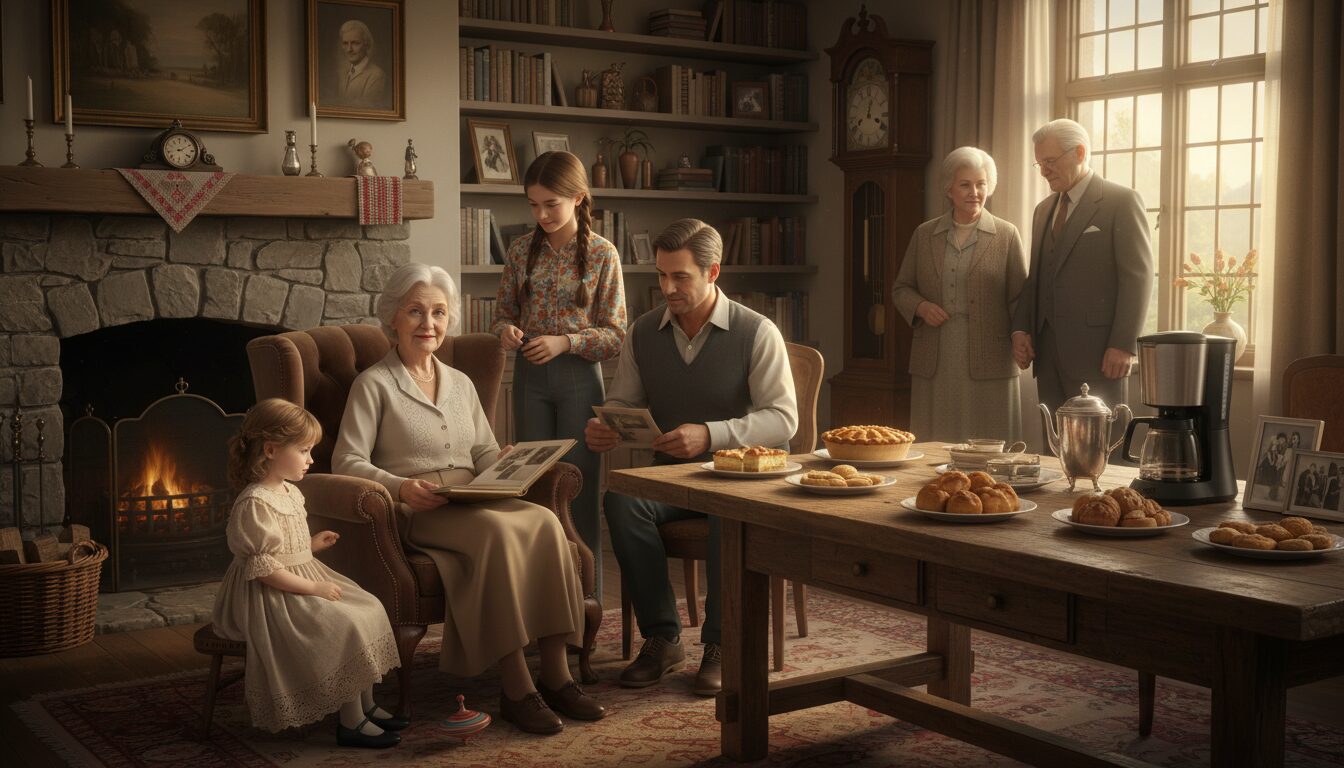
A household may choose to establish a simple ritual: each year, a photo album is given, gathering moments shared between the grandmother and the children. Practically, this involves noting anecdotes, collecting some drawings, and presenting them in a quiet moment. This type of initiative strengthens family memory and values transmission between generations.
Highlighting the story of this celebration also helps remove guilt: it is not necessary to follow a commercial trend to be respectful. The essential remains the attention paid to the elderly person and the families’ emotional investment.
Key phrase: turning a commercial date into a lasting tradition depends mainly on the family and the affectionate rituals it chooses to maintain.
Grandmothers’ Day in Family Practice: Celebration Ideas and Concrete Gestures
In the daily lives of parents with little ones, the celebration should remain accessible and soothing. The most appreciated gestures are often the simplest: a voice call, a drawing given by the child, or reading a story together. These small rituals create emotional landmarks without generating extra pressure for already busy parents.
Activities Suitable for Babies and Elders
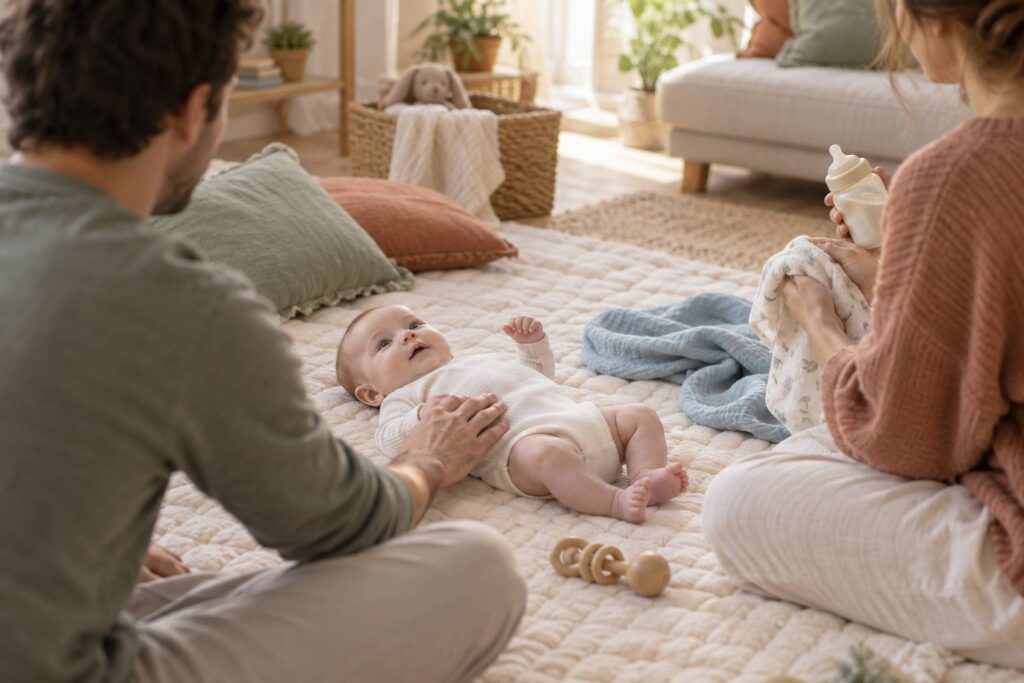
When the baby is very young, involvement can be limited to physical presence or sensory exchanges: letting the grandmother gently hold the infant’s hand, allowing her to bring her cheek close to feel the skin, or simply singing a lullaby together. These interactions reinforce the emotional imprint and help build shared memories.
For grandmothers living in care facilities, the visit can be organized around familiar objects: a comforter, a photo, or a short video. The La Vie de Bébé guide on Grandmothers’ Day offers concrete ideas to adapt meetings according to the elder’s health and fatigue.
Ideas for Homemade and Inclusive Gifts
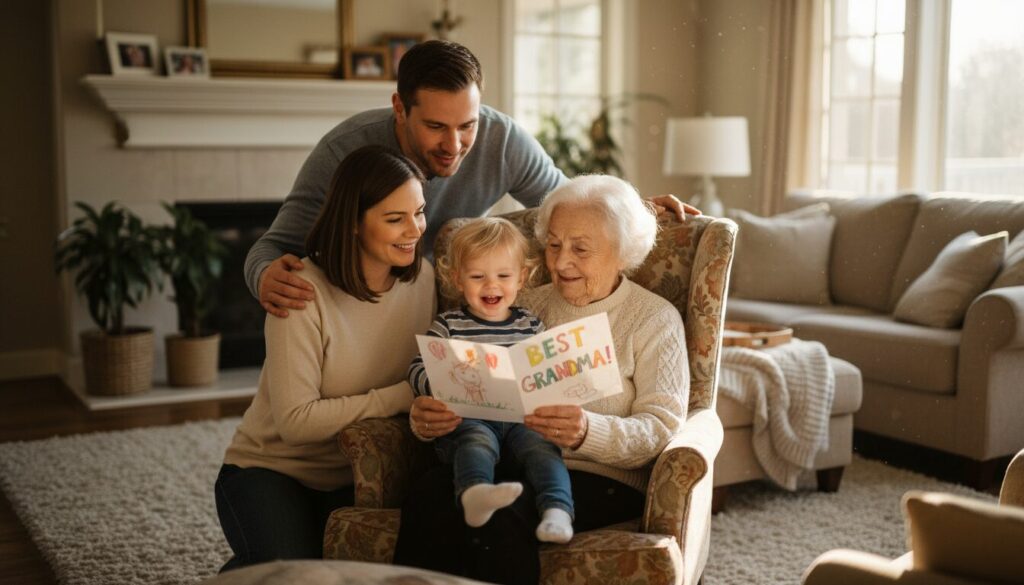
A handmade gift often has more value than a bought present. For example, a frame decorated with the child’s handprint, a collage of drawings, or a short video where the child smiles and babbles. These creations cost little but carry a lot of meaning. They are durable and integrate into the family memory.
- Sound card: recording the baby’s voice or a short message from the family.
- Collaborative album: each member adds a page with a memory.
- Shared time: reserving a weekly hour for a call or visit.
By combining respect for rhythm — that of the baby as well as the grandmother — and creativity, the celebration becomes a moment of shared well-being. The important thing is to avoid performance and favor authenticity.
Those seeking practical ideas will also find resources via La Vie de Bébé’s dedicated article, where card templates and activity suggestions are offered to ease organization.
Key phrase: the best celebration features simple, repeatable gestures, adapted to the rhythms of grandmothers and little ones.
Social and Emotional Role of Grandmothers: Transmission, Support, and Memory
Grandmothers often play a pivotal role in family dynamics. They ensure cultural transmission, tell anecdotes that structure family identity, and provide precious emotional support to young parents. Their presence contributes to children’s emotional stability while bringing an obvious generational continuity.
Transmission and Family Tales
Stories told by grandmothers serve as a link between past and present. A tale or an anecdote becomes an anchor for the child who will later trace their roots. The very act of storytelling encourages language development in the young child and nurtures their curiosity.
A common example: a grandmother who shares a family cake recipe. Beyond cooking, it is a transmission of gestures, tastes, and values. These practical transmissions are concrete ways to inscribe family memory into the daily life of the youngest.
Support for Parents and Child Well-Being
Practically, a grandmother’s availability to watch a child for a few hours can transform parents’ daily life. But the more subtle contribution is emotional: the grandmother reassures, advises without judging, and offers a soothing presence. This complementarity reduces parental stress and promotes calmer interactions with the baby.
The social appreciation of this role passes through simple recognition gestures. Grandmothers’ Day then becomes a moment to say thank you and publicly acknowledge the elders’ emotional investment.
Key phrase: recognizing grandmothers’ place means preserving an emotional and cultural resource essential to family life.
Tradition, Memory, and Contemporary Practices: How to Celebrate with Meaning
Grandmothers’ Day is nourished by a blend of tradition and personal innovations. In 2026, families have many tools to connect physical closeness and maintaining bonds at a distance: voice messages, videos, digital albums. These new formats coexist with classic rituals and allow adapting the celebration to current family realities.
Proposals for a Simple and Lasting Ritual
To establish a tradition that lasts, it is advised to choose an annual gesture easy to reproduce: a meeting around a dessert, an album updated each year, or a handwritten letter. Repetition creates memory. A guiding character, like the fictitious Martin family — young parents, baby named Léa, and grandmother Amélie — can serve as an example: every first Sunday of March, the family sends a package box containing a drawing and a photo, then shares a 20-minute video call. This simple habit strengthens the bond without overloading the schedule.
Contemporary practices also allow including distant grandparents: a short video of the child singing, a playlist of family songs, or a notebook of small digital anecdotes. The essential thing is to preserve the sincerity of the gesture.
Practical Table: Ideas According to Context
| Family context | Celebration idea | Why it works |
|---|---|---|
| Geographically close | Homemade lunch + photo album | Fosters physical presence and visual memory |
| Home in nursing home | Memory box and short visit | Respects the rhythm and offers something concrete |
| Great distance | Video message and postal sending | Keeps warmth despite the distance |
This table helps to choose an adapted action. The important thing is to prioritize approaches that are achievable and carried by love and consideration.
Key phrase: celebrating with meaning means choosing repeatable gestures that nourish memory and strengthen the intergenerational bond.
Why was Grandmothers’ Day created?
Grandmothers’ Day was born in 1987, at the initiative of a commercial brand, but it was quickly adopted by families as a privileged moment of affectionate recognition towards elders.
When is Grandmothers’ Day celebrated in France?
It is generally celebrated on the first Sunday of March, making it an annual landmark easy to integrate into family rituals.
How to involve a baby in the celebration?
For the very young, favor sensory interactions: gentle touch, singing, photo, or short video. Simple gestures have great emotional impact and do not tire the baby.
What to do if the grandmother is distant or in a care facility?
Send a package containing drawings, photos, and a letter, or organize a brief video call. Adapt the frequency and duration of exchanges to the grandmother’s comfort.
In brief:
- Contemporary origin: Grandmothers’ Day in France finds its roots in a commercial initiative but has taken hold as an affectionate celebration.
- History and family memory: the date and customs have evolved according to countries, offering varied opportunities for intergenerational recognition.
- Modern celebration: practical ideas and simple gestures allow young parents to create meaningful rituals.
- The role of grandmothers: transmission, emotional support, and a concrete presence in the lives of little ones.
- Resources and practical leads: advice for combining tenderness with respect for the rhythms of babies and elders.
The Moving Origins of Grandmothers’ Day: Origin and Genesis of the Celebration
Grandmothers’ Day, as it is known today in France, was established late in the modern calendar. Its official origin dates back to 1987: a coffee brand launched the idea to create an affectionate event centered around elders. This commercial gesture transformed over the years into a national occasion to express love and recognition towards grandmothers.
Understanding this birth helps to accept the dual reality of the celebration: on the one hand a marketing initiative, on the other a social space where the family renews its bonds. The fact that a company started the process does not diminish the sincerity of the exchanges that follow. Families quickly embraced the date to turn it into an affectionate tradition, marked by calls, visits, and small symbolic gestures.
Sociocultural context at the end of the 20th century
At the end of the 1980s, the structure of families and the symbolic weight of elders evolved. Grandparents occupied a central place in the family support network, notably in childcare and the transmission of cultural habits. The creation of a dedicated celebration found fertile ground: society was seeking landmarks to value intergenerational bonds.
The way the celebration was adopted differs according to social environments and regions. For some families, it is the occasion of a friendly lunch; for others, a simple phone call carrying sweet words. The real issue lies in the symbolic value: reminding an elder that she is loved and useful to the clan’s memory.
Concrete examples of family adoption
Several families have turned this day into a simple and lasting ritual: giving a bouquet, preparing a handmade card by the grandchildren, or sharing a moment around photo albums. These concrete gestures connect memory and the present by involving the youngest in affectionate transmission. A common case: a young mother calls her own mother with the baby on the phone so the grandmother can hear the child’s voice — an act that strengthens generational continuity.
Understanding the origin also helps to temper expectations: the celebration does not require large expenses but encourages presence and attention. This positioning helps parents to imagine rituals that are more sincere than ostentatious.
Key phrase: remember that Grandmothers’ Day was born of a late initiative but becomes a moment of authentic recognition when supported by simple and regular gestures.
History and Evolution: How the Celebration Became Part of Family Tradition
The history of Grandmothers’ Day shows a gradual appropriation by society. From the late 1980s, the media and businesses relayed the event; gradually, the custom spread within homes. The first Sunday of March became the annual landmark to express affection. This calendar encourages the emergence of repetitive habits, essential for a ritual to become a tradition.
The transformation of the celebration into a family rite passes through reproducible practices: cards, shared desserts, intergenerational activities. These acts feed the home’s collective memory and nurture the bond between grandmothers and children. The evolution also shows families’ ability to change the initial meaning to make it more humane and less commercial.
Cultural and International Differences
The way the event is celebrated varies by country. In Bulgaria, for example, the celebration takes place on the first Wednesday of December. In Poland, two separate days honor grandmothers and grandfathers in January. Some countries prefer a joint grandparents’ day: this is the case in the United States and Canada, where the celebration falls on the first Sunday of September. These differences reflect varying social rhythms and show that the logic of elder recognition is universal but ritualized in diverse ways.
For French families, the date at the beginning of March comes well before spring blossoms: giving flowers or a bouquet becomes a strong symbol of renewal and love. The seasonal anchoring facilitates the creation of sensory rituals — tasting a cake, smelling flowers — that remain engraved in children’s memory.
Practical Case: Establishing a Meaningful Ritual
A household may choose to establish a simple ritual: each year, a photo album is given, gathering moments shared between the grandmother and the children. Practically, this involves noting anecdotes, collecting some drawings, and presenting them in a quiet moment. This type of initiative strengthens family memory and values transmission between generations.
Highlighting the story of this celebration also helps remove guilt: it is not necessary to follow a commercial trend to be respectful. The essential remains the attention paid to the elderly person and the families’ emotional investment.
Key phrase: turning a commercial date into a lasting tradition depends mainly on the family and the affectionate rituals it chooses to maintain.
Grandmothers’ Day in Family Practice: Celebration Ideas and Concrete Gestures
In the daily lives of parents with little ones, the celebration should remain accessible and soothing. The most appreciated gestures are often the simplest: a voice call, a drawing given by the child, or reading a story together. These small rituals create emotional landmarks without generating extra pressure for already busy parents.
Activities Suitable for Babies and Elders
When the baby is very young, involvement can be limited to physical presence or sensory exchanges: letting the grandmother gently hold the infant’s hand, allowing her to bring her cheek close to feel the skin, or simply singing a lullaby together. These interactions reinforce the emotional imprint and help build shared memories.
For grandmothers living in care facilities, the visit can be organized around familiar objects: a comforter, a photo, or a short video. The La Vie de Bébé guide on Grandmothers’ Day offers concrete ideas to adapt meetings according to the elder’s health and fatigue.
Ideas for Homemade and Inclusive Gifts
A handmade gift often has more value than a bought present. For example, a frame decorated with the child’s handprint, a collage of drawings, or a short video where the child smiles and babbles. These creations cost little but carry a lot of meaning. They are durable and integrate into the family memory.
- Sound card: recording the baby’s voice or a short message from the family.
- Collaborative album: each member adds a page with a memory.
- Shared time: reserving a weekly hour for a call or visit.
By combining respect for rhythm — that of the baby as well as the grandmother — and creativity, the celebration becomes a moment of shared well-being. The important thing is to avoid performance and favor authenticity.
Those seeking practical ideas will also find resources via La Vie de Bébé’s dedicated article, where card templates and activity suggestions are offered to ease organization.
Key phrase: the best celebration features simple, repeatable gestures, adapted to the rhythms of grandmothers and little ones.
Social and Emotional Role of Grandmothers: Transmission, Support, and Memory
Grandmothers often play a pivotal role in family dynamics. They ensure cultural transmission, tell anecdotes that structure family identity, and provide precious emotional support to young parents. Their presence contributes to children’s emotional stability while bringing an obvious generational continuity.
Transmission and Family Tales
Stories told by grandmothers serve as a link between past and present. A tale or an anecdote becomes an anchor for the child who will later trace their roots. The very act of storytelling encourages language development in the young child and nurtures their curiosity.
A common example: a grandmother who shares a family cake recipe. Beyond cooking, it is a transmission of gestures, tastes, and values. These practical transmissions are concrete ways to inscribe family memory into the daily life of the youngest.
Support for Parents and Child Well-Being
Practically, a grandmother’s availability to watch a child for a few hours can transform parents’ daily life. But the more subtle contribution is emotional: the grandmother reassures, advises without judging, and offers a soothing presence. This complementarity reduces parental stress and promotes calmer interactions with the baby.
The social appreciation of this role passes through simple recognition gestures. Grandmothers’ Day then becomes a moment to say thank you and publicly acknowledge the elders’ emotional investment.
Key phrase: recognizing grandmothers’ place means preserving an emotional and cultural resource essential to family life.
Tradition, Memory, and Contemporary Practices: How to Celebrate with Meaning
Grandmothers’ Day is nourished by a blend of tradition and personal innovations. In 2026, families have many tools to connect physical closeness and maintaining bonds at a distance: voice messages, videos, digital albums. These new formats coexist with classic rituals and allow adapting the celebration to current family realities.
Proposals for a Simple and Lasting Ritual
To establish a tradition that lasts, it is advised to choose an annual gesture easy to reproduce: a meeting around a dessert, an album updated each year, or a handwritten letter. Repetition creates memory. A guiding character, like the fictitious Martin family — young parents, baby named Léa, and grandmother Amélie — can serve as an example: every first Sunday of March, the family sends a package box containing a drawing and a photo, then shares a 20-minute video call. This simple habit strengthens the bond without overloading the schedule.
Contemporary practices also allow including distant grandparents: a short video of the child singing, a playlist of family songs, or a notebook of small digital anecdotes. The essential thing is to preserve the sincerity of the gesture.
Practical Table: Ideas According to Context
| Family context | Celebration idea | Why it works |
|---|---|---|
| Geographically close | Homemade lunch + photo album | Fosters physical presence and visual memory |
| Home in nursing home | Memory box and short visit | Respects the rhythm and offers something concrete |
| Great distance | Video message and postal sending | Keeps warmth despite the distance |
This table helps to choose an adapted action. The important thing is to prioritize approaches that are achievable and carried by love and consideration.
Key phrase: celebrating with meaning means choosing repeatable gestures that nourish memory and strengthen the intergenerational bond.
Why was Grandmothers’ Day created?
Grandmothers’ Day was born in 1987, at the initiative of a commercial brand, but it was quickly adopted by families as a privileged moment of affectionate recognition towards elders.
When is Grandmothers’ Day celebrated in France?
It is generally celebrated on the first Sunday of March, making it an annual landmark easy to integrate into family rituals.
How to involve a baby in the celebration?
For the very young, favor sensory interactions: gentle touch, singing, photo, or short video. Simple gestures have great emotional impact and do not tire the baby.
What to do if the grandmother is distant or in a care facility?
Send a package containing drawings, photos, and a letter, or organize a brief video call. Adapt the frequency and duration of exchanges to the grandmother’s comfort.