

In brief:
- Wasp stings generally cause a sharp pain followed by swelling and local itching; most ease within a few days.
- Act quickly: disinfect, remove the sting if present without pinching, apply ice and prevent infections.
- Watch for systemic signs: widespread hives, breathing difficulty, discomfort — possible allergic reactions requiring medical emergency.
- For babies and young children, prioritize safety: consult a healthcare professional for a suitable antihistamine and, if necessary, an action plan with an allergist.
- Simple prevention: wear covering clothing, avoid perfumes and sweet foods outdoors, use wasp traps, and monitor nests to reduce risks.
Wasp stings: recognize symptoms and act quickly
Wasp stings most often occur during warm months, from April and especially in July-August. They cause sharp pain at the moment of the sting, then local swelling and sometimes itching.
Quickly identifying the nature of the sting and assessing its severity is essential. A single case on a limb is often mild, whereas a sting on the throat, mouth, or multiple close stings increase the risk of complications. In these situations, vigilance is paramount.
Local and general signs
Locally, the stung area becomes red, warm, and swollen. The pain is often intense during the first half-hour then decreases. The swelling can persist for several days, especially in children.
General signs to watch for include headaches, nausea, vomiting, or unusual weakness. These symptoms appear more often after multiple stings or in sensitive individuals.
List of immediate actions (step-by-step guide)
- Move away the child or adult from the source (nest, open trash, etc.) to avoid further stings.
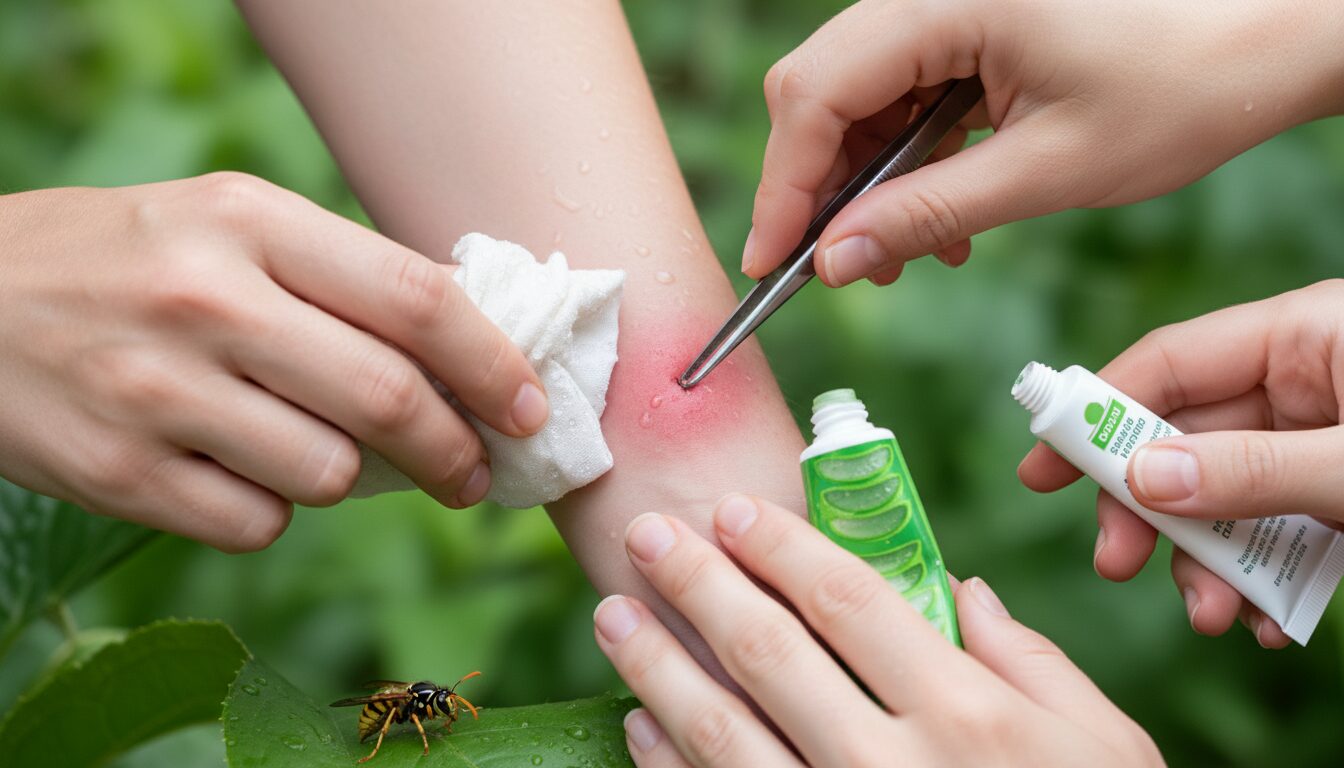
- Disinfect the area (water and soap or antiseptic solution).
- Remove the sting if visible using a blunt blade or seek help at a pharmacy — avoid tweezers.
- Apply ice wrapped in a cloth for 10 to 15 minutes to limit pain and swelling.
- Monitor for signs of allergic reactions and call emergency services if necessary.
This checklist helps prioritize actions and reduces parents’ stress. Claire, who took her son Leo to the park, followed these steps during a picnic: calmness, disinfection, cold, then called the pharmacist for advice. This organized action prevented panic and allowed quick relief.
Key phrase of the section: quickly recognizing local and general signs allows calm action and prevents worsening.
Wasp stings in babies and children: immediate actions to know
Wasp stings in babies require special attention. Thin skin, body proportion, and vulnerability of airways make any swelling of the face or throat potentially more dangerous. The first rule is safety: calm the child, limit movements, and quickly assess symptom extent.
In infants, subtle signs can mask an allergic reaction. Unusual drowsiness, paleness, or irregular breathing should alert. In these cases, considering a medical emergency is wise.
What to do in the first minutes?
Start by disinfecting the area with soap and water. If a sting is present, remove the sting without pinching: use a rigid card or blade to scrape. Avoid tweezers which may increase venom release.
Apply cold compresses or ice wrapped for 10 to 15 minutes, then observe. If the child cries but remains active and breathes normally, home monitoring may suffice. If the face, mouth, or throat swell, call emergency services immediately.
Medications and practical advice
Using an oral antihistamine can reduce itching and hives. However, for very young children, consult the pharmacist before any administration. Applying an ointment with a low dose of cortisone may be advised on medical recommendation.
An adrenaline auto-injector device is not systematically recommended but should be prescribed if there is a known allergy history. Consulting an allergist will help define a personalized action plan for the family.
Concrete example
During a snack on a terrace, Leo, 18 months old, was stung on the arm. His mother calmly followed the steps: moving away, disinfecting, sting removal by the pharmacist, ice, and monitoring for an hour. No general signs appeared. Pediatric follow-up confirmed a local reaction without needing an antihistamine.
Key phrase of the section: for babies and young children, reacting calmly, disinfecting, and monitoring are key to preventing escalation to an emergency.
Wasp stings: quickly relieve pain, swelling, and itching
Reducing pain, limiting swelling, and calming itching are immediate goals after a wasp sting. Several simple gestures provide quick relief and prevent complications: applying cold, antisepsis, and if necessary, using appropriate medications.
Pain is generally brief but intense. Applying ice prevents the edema from spreading and reduces nociception. Never apply ice directly on the skin; wrap it in a cloth to avoid frostbite.
Medications and topical products
Oral antihistamines relieve itching and generalized hives. Low potency cortisone-based topical creams can reduce local inflammation; ask the pharmacist or doctor for advice for children.
Aspivenin or other suction devices sold at pharmacies can reduce the amount of local venom. They provide real help in the early moments, before medical consultation if necessary.
Natural remedies and precautions
Some home remedies are useful: apple cider vinegar dabbed on the sting helps neutralize venom for some people, and a baking soda paste can soothe edema. Lavender essential oil is mentioned as soothing but is not recommended for young children and pregnant women without professional advice.
It is important to remember that these natural remedies complement but do not replace medications in case of severe allergic reactions.
Practical tip
Having a family emergency kit with antiseptic, reusable cold compresses, a suitable antihistamine, and the pediatrician’s number makes managing a sting during an outing easier. The La Vie de Bébé platform offers practical sheets to build this kit and prepare an action plan.
Key phrase of the section: cold, disinfection, and appropriate treatment quickly reduce discomfort after a sting.
Wasp stings: when to talk about allergic reactions and what treatments
Allergic reactions to stings are rare but potentially severe. In France, about 3 to 4% of the population is affected. Recognizing warning signs allows quick action: widespread hives, throat swelling, breathing difficulty, severe malaise or loss of consciousness require a medical emergency.
Anaphylactic shock is the extreme expression of an allergic reaction. It includes a drop in blood pressure, labored breathing, and often altered consciousness. Injectable adrenaline is the first-line treatment and must be administered without delay by a trained person or according to the instructions of the prescribed auto-injector.
Summary table of signs and actions
| Severity | Main signs | Recommended action |
|---|---|---|
| Mild | Local pain, small swelling, itching | Disinfect, ice, home monitoring |
| Moderate | Significant swelling, general signs (nausea, malaise) | Consult a doctor, antihistamine upon medical advice |
| Severe | Widespread hives, breathing difficulty, loss of consciousness | Call emergency services, lateral safety position, adrenaline if prescribed (medical emergency) |
Desensitization and allergological follow-up
For people who have had a confirmed allergic reaction, desensitization is an effective option. It often starts with an accelerated phase in a hospital setting, followed by regular monthly injections for several years. This protocol yields very good results but requires long-term commitment and precise medical follow-up.
Consulting an allergist also makes it possible to get a personalized action plan, possibly including the prescription of an adrenaline auto-injector and education on its use.
Key phrase of the section: recognizing an allergic reaction and acting quickly saves lives; specialized follow-up offers lasting solutions.
Wasp stings: practical prevention to avoid incidents in the family
Prevention is the best strategy to limit wasp stings during family outings. Some behavior adjustments often suffice: avoid strong perfumes, prefer clothes in neutral colors, cover sweet foods, and monitor nests near playgrounds and trash bins.
Walking barefoot increases the risk of stepping on a wasp on the ground; closed shoes during walks are a simple and effective measure. For outdoor meals, homemade wasp traps reduce exposure without harming the environment.
Behaviors to adopt
Keeping calm in front of a wasp is essential. Sudden movements increase the risk of being stung. Teaching children to gently repel an insect with their hand rather than panic avoids many accidents.
If a nest is identified near a frequented place, contact municipal services for a safe intervention rather than trying to remove the nest yourself.
Resources and preparation
Preparing an appropriate first aid kit for outdoor use is reassuring for parents. It should contain: antiseptic, compresses, a suitable antihistamine, cold compresses, and the pediatrician’s number. The La Vie de Bébé platform offers practical sheets to assemble this kit and prepare serene outings.
Key phrase of the section: prevention is better than cure — simple gestures significantly reduce the risk of stings during family activities.
Does a wasp sting always leave a sting?
No. Unlike the bee, the wasp rarely leaves its sting. If a sting is visible, it must be removed without pinching, by scraping with a blade or asking for help in a pharmacy.
When should you call emergency services after a sting?
Call emergency services if signs of anaphylactic shock appear: breathing difficulties, significant swelling of the face or throat, loss of consciousness, drop in blood pressure. Any suspicion of systemic reaction requires a medical emergency.
Are natural remedies effective?
Some remedies like apple cider vinegar or baking soda can locally relieve, but they do not replace medical treatment in case of allergic reaction or multiple stings. Always consult a professional for infants.
Should you always take an antihistamine after a sting?
No. Antihistamines are useful in cases of intense itching or generalized hives. For very young children, ask the pharmacist or doctor before administration.